Tallinn court rejects insurer's recovery claim over apartment building fire
Harju District Court in Estonia dismissed an insurer's claim to recover compensation it paid after a 2022 fire at a Tallinn apartment building. The ruling has not yet entered into force.
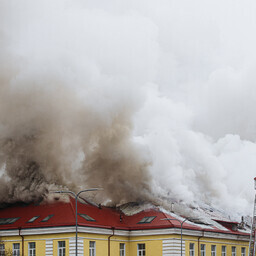
Harju District Court in Estonia has dismissed an insurer's claim seeking to recover compensation paid out after a fire at an apartment building on Pae tänav in Tallinn. The case turned on whether an insurer may demand repayment from an apartment association and one apartment owner. The ruling has not yet entered into force.
The fire broke out on April 7, 2022. The insurer had covered damage and expenses linked to six apartments and eventually sought €145,086.26. The sum included restoring the apartments, replacing damaged household belongings and temporary housing.
The insurer argued that the fire started in the chimney of a fireplace in one apartment and that shortcomings in the building's fire safety measures worsened the damage. The court held that the evidence was insufficient to establish that the fire began in that chimney. It also found no breach of the association's duty to manage common property. Because that alone does not rule out every claim, the court also considered other legal grounds and whether compensation could be reduced.
The insurer told the court it had not inspected the building's overall condition when signing the contracts, since it insured individual apartments and did not regard the building's state as decisive. Yet it based its claim on alleged structural and fire safety deficiencies. The court said this inconsistency had to be weighed, noting that an apartment's condition is also affected by the roof, load-bearing structures and fire safety systems. A professional insurer must be able to identify the information it needs to assess risk. That does not mean a technical inspection is required before every contract.
The court did not dispute that apartments and belongings were damaged, and found the temporary housing costs justified because the building was uninhabitable, without electricity and heavily affected by moisture. However, part of the additional damage could have been avoided through reasonable cleaning and drying. As an alternative ground, the court concluded that even if the association were liable, making it bear the full cost would be unreasonably burdensome, so it reduced the compensation to zero.
The court stressed that such recovery claims against an apartment association are not automatically excluded and must be judged case by case. The ruling can be appealed to Tallinn Circuit Court within 15 days of receipt.
Last April, ETV's "Impulss" program reported that the 77-unit building was still without a proper roof because its insurer, Norwegian company Gjensidige, had refused to cover the costs.