17th-century Italian music resounds in Tartu with recorder and theorbo
A classical guitar festival is underway in Tartu, Estonia, opened by a concert from the Swiss-Estonian baroque duo Viiv. The duo performed 17th-century Italian music using a recorder and the rare theorbo instrument.
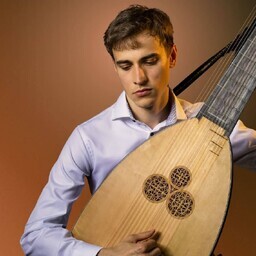
A classical guitar festival is taking place in the Estonian city of Tartu, offering audiences a varied concert programme featuring both internationally renowned and emerging musicians.
The festival opened with a concert by the Swiss-Estonian baroque duo Viiv, titled "Rebels and Dreamers of the Early Baroque." Performers Siiri Löffel and Priit Peterson presented 17th-century Italian music accompanied by a recorder and the relatively rare theorbo. According to Estonian broadcaster ERR's news programme "Aktuaalne Kaamera," only a handful of musicians in Estonia can play the instrument.
A rare instrument
Peterson explained that the theorbo originates from 17th-century Italy and is a distant relative of the guitar, though it cannot really be called a guitar — it is more directly related to the lute. The instrument is distinguished by seven long bass strings that produce very low tones. Historically it was used mainly as an accompanying instrument, since its capabilities as a solo instrument are fairly limited.
Peterson said what draws him most to the theorbo is its distinctive timbre, which differs greatly from that of the classical guitar. This quality allows it to be played alongside other instruments, since the theorbo is in relatively high demand within early music circles. While there are not many performers of the instrument, numerous ensembles — including some in Estonia — seek to include it in their lineup.
Upcoming festival concerts will be dedicated to classical guitar music, featuring performers including Harald Traas, winner of numerous competitions. The festival runs until September 26.
/nginx/o/2025/12/04/17319587t1h565c.jpg)