Camping beside one of Britain's last temperate rainforests in Dartmoor
A small campsite on the edge of Dartmoor, Devon, lets visitors pitch tents right next to one of Britain's last remaining fragments of temperate rainforest. The owners spent seven years restoring the fragile habitat while building a low-impact site around it.
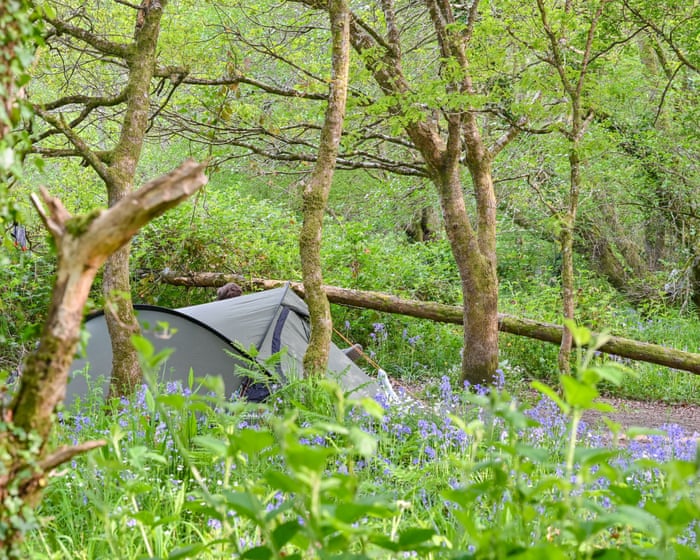
On the eastern edge of Dartmoor, between the villages of Lustleigh and Moretonhampstead, sits Wray Valley Camping — a small site bordering one of the last surviving fragments of Britain's temperate, or Atlantic, rainforest. This rare habitat once covered up to 20% of the UK, stretching from Scotland's western Highlands to Cornwall, but today less than 5% of that cover remains. Devon's persistent dampness and Atlantic exposure make it one of the few remaining strongholds for this fragile ecosystem.
The campsite has been built from the ground up over seven years by owners Michelle Grist and Kevin Chamberlain, neither of whom had run a campsite before. Years of personal camping experience, both in the UK and abroad, shaped their approach: only tents are allowed, with no vehicles driven onto the site. The land was initially flooded, and the couple worked alongside several organisations on restoration, planting 1,200 native plants, adding 200 metres of new hedgerow, planting 45 native saplings and removing invasive species.
In February this year, six acres of the site's ten-acre estate were officially designated a Devon county wildlife site, recognising its value as one of Dartmoor's remaining fragments of temperate rainforest and wet woodland. Visitors can now stay in one of four "Nearly Wild" pitches right beside the woodland, with a short signposted trail explaining the restoration work.
About a 40-minute drive away lies Dartmoor's most popular temperate rainforest, Wistman's Wood, where heavy visitor numbers have caused path erosion and damage to moss and roots. Wray Valley's owners have deliberately taken the opposite approach, limiting both visitor numbers and comforts to reduce impact. There are no electric hookups, cars stay in the car park, and campers wheelbarrow their gear to their pitch. The site runs on borehole water and solar power, and offers discounts to guests arriving on foot, by bike or by public transport.
The surrounding area offers further attractions, including the Wray Valley walking and cycling trail, the granite boulders and medieval settlement remains at Hound Tor, and a nearby site of special scientific interest at Bovey Tracey, home to adders and ground-nesting birds.