The Atlantic: US and NATO lack a plan for a coordinated Russia-China attack
An Atlantic investigation finds the United States and NATO have no clear plan for a scenario in which China invades Taiwan while Russia simultaneously attacks a NATO member in Eastern Europe. Experts warn this risk is studied surprisingly rarely.
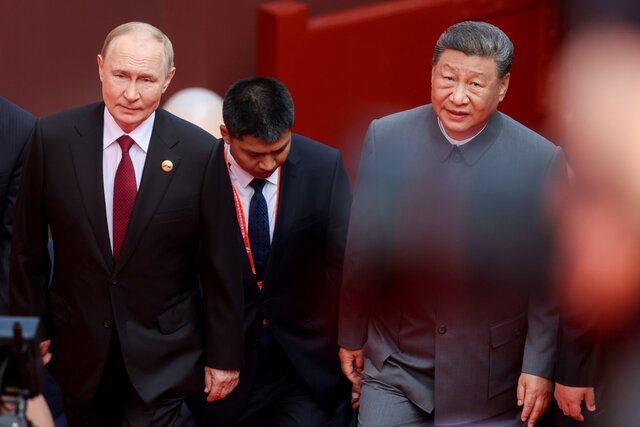
Journalist Simon Shuster reports in The Atlantic that the West is unprepared for a hypothetical scenario in which China and Russia strike in different regions at the same time. For now, such coordinated action is considered unlikely, since concealing cooperation on that scale would be nearly impossible — but experts and strategists interviewed for the piece admitted they could not clearly say how the West would respond, and that these risks are rarely studied in detail.
Florence Gaub, director of the research division at the NATO Defense College in Rome, said the alliance's strategists are "keenly aware" of this planning gap but have taken no steps to close it. Retired US Navy Rear Admiral Mark Montgomery said the last time war games examined a two-front scenario against Russia and China was 15 years ago, and the results were troubling — the United States lacked both the weapons stockpiles and the industrial capacity to sustain prolonged fighting on multiple fronts.
The article notes that Moscow and Beijing may currently see their window of opportunity to strike the West as wider than ever. The United States, tied up in its conflict with Iran, has shifted many ships and aircraft from Asia and Europe to the Middle East, and its stockpile of advanced air-defense missiles has shrunk by roughly two-thirds since February. Donald Trump's confrontational stance toward Washington's own allies has also widened the rift with European NATO partners to its deepest point in decades.
Experts sound the alarm
NATO Secretary General Mark Rutte said in December that if China took military action against Taiwan, it would likely pressure its "junior partner" Russia to keep the West occupied in Europe. The Prague-based European Values Center for Security Policy has run about 20 rounds of war games on this scenario since spring 2024, and the results show that in most cases the United States prioritizes the Chinese threat and redirects forces from Europe to Asia, leaving NATO allies to face Russia alone. The center's director, Jakub Janda, said all the scenarios point to the same conclusion: the need for Western unity.

