Renovation of Torņa iela yields rich archaeological evidence of medieval Riga life
Archaeological work accompanying the renovation of Torņa iela in Riga has produced a wealth of finds shedding new light on the lives of Riga’s residents from the Middle Ages to the 18th century. The most valuable evidence was preserved in a filled-in medieval moat.
The reconstruction of the Art Museum “Arsenāls” and the adjacent Torņa iela has yielded a substantial archaeological collection, allowing researchers to better understand the development of the northwestern part of Old Riga. According to the project’s client, state-owned VNĪ, the most significant outcome is not individual objects but the broader picture of the area’s relief, buildings and cultural layer from medieval times to the 19th century.
The backfilled medieval city moat turned out to be especially valuable, as its wet environment preserved leather, textile and wooden items that would not normally survive. The finds illustrate the transition from the late Middle Ages to the early modern period and confirm Riga’s role as a lively trading city. A wide range of 16th–18th century artefacts points to a diverse, polyethnic society: pottery and stoneware fragments, white clay pipes, coins, buttons, buckles, knives, tableware, decorative book and furniture fittings, and numerous well-preserved leather shoes. Military items such as musket, pistol and artillery bullets, as well as cavalry equipment, reflect the area of the Riga garrison during Swedish rule.
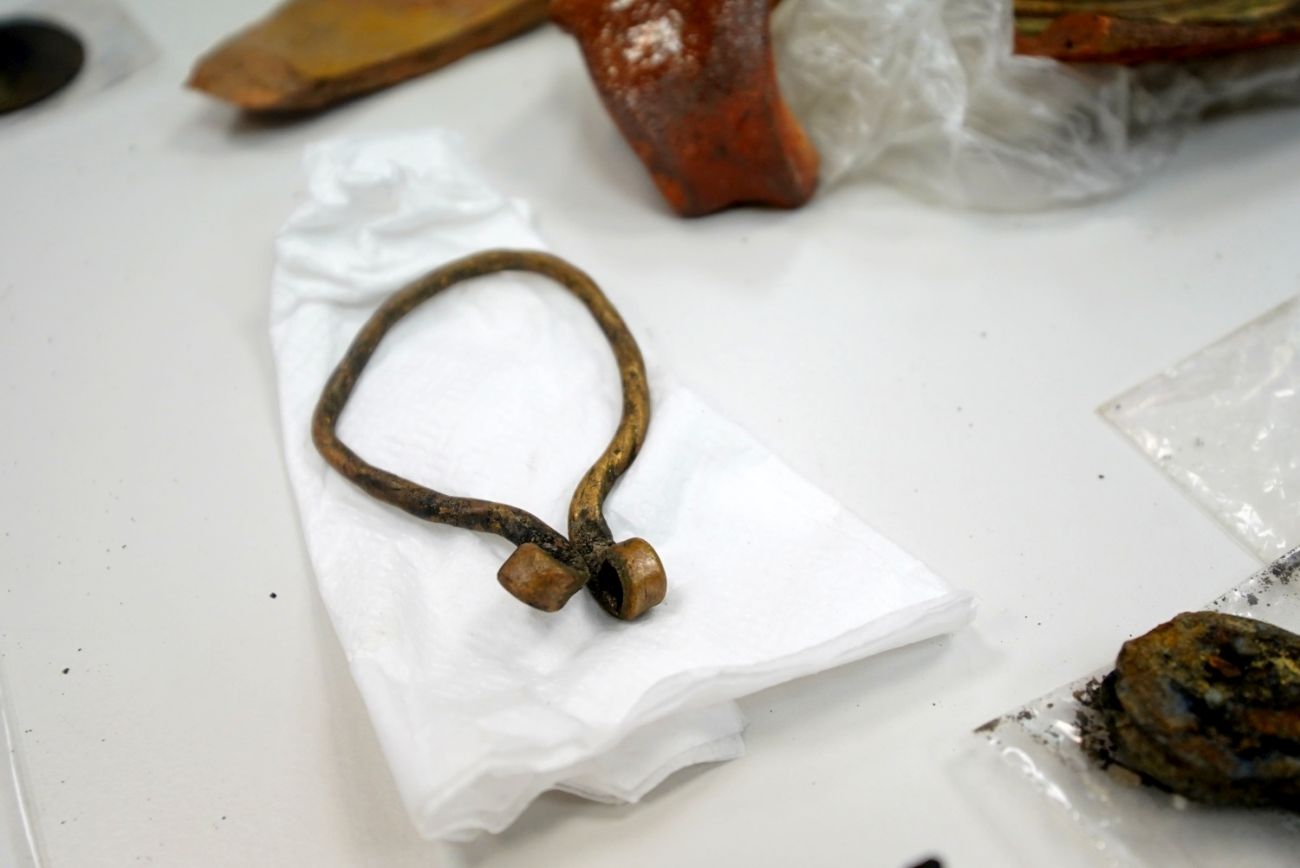
Among the rarer discoveries are fragments of iron armour plates with remnants of leather straps and buckles, which are seldom found in Latvian archaeological material. A horseshoe-shaped brooch with turned-up ends was also unearthed, providing significant evidence of the presence of ethnic Latvians in medieval Riga. Archaeologist Artūrs Tomsons said the finds complement understanding of Riga’s ethnically diverse society and provide new material for discussions about the city’s cultural environment, while also refuting tendentious modern narratives about Latvian history.
The street renovation is being carried out from Jēkaba iela to Arsenāla iela. At the crossing with Noliktavas iela, the street level will be raised and a granite cobblestone surface installed to improve accessibility for people with reduced mobility. A modern stormwater drainage system is also being built to prevent high groundwater from seeping into the museum’s basement. Archaeological monitoring will continue until September.
Inside the museum, work continues on room reconstruction, stair restoration, roof work and complex engineering systems, including ventilation, heating, climate control and automated mist spraying, intended to create a suitable microclimate for artworks. A digital model of the construction project has been developed using BIM methodology by SIA “ARH stadija” together with VNĪ specialists. The collection will be handed over to the Riga History and Navigation Museum after scientific processing, and bioarchaeological material will be used by chemists and biologists. A fuller report is planned for autumn. Construction is expected to finish by the end of 2027, and the museum is scheduled to move into the renovated building in 2028. The first stage of the Arsenāls renovation, completed in 2021, included facade restoration, window renovation and foundation waterproofing.
/nginx/o/2026/09/28/17944295t1hfcb5.jpg)