Trump claimed Russia and Ukraine agreed to an energy truce — strikes continued anyway
Hours after Donald Trump announced Russia and Ukraine had agreed to stop striking energy facilities, both sides kept trading attacks. The Kremlin confirmed no real deal was reached during the recent talks.
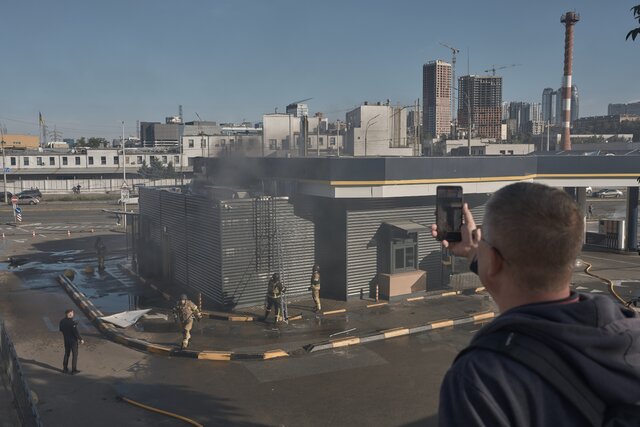
Russia and Ukraine continued exchanging strikes on the morning of September 15, just hours after U.S. President Donald Trump claimed the two countries had agreed to an energy ceasefire.
Ukrainian forces struck Rosneft's Syzran oil refinery in Russia's Samara region overnight, sparking a fire. More than 40 drones were shot down over the region. In Taganrog, strikes damaged warehouses belonging to Ozon and local agricultural firms, along with an educational institution, a store, and several residential buildings. The independent Telegram channel Astra reported that the Taganrog-Tsentralny military airfield was also hit. No casualties were reported in either location.
Russian drones struck Kyiv the same morning, setting two gas stations ablaze in the Darnytskyi and Holosiivskyi districts and injuring eight people. A warehouse and several nonresidential buildings elsewhere in the city were also hit. In Zaporizhzhia, a strike on an infrastructure facility killed one man and injured four others.
Ukrainian President Volodymyr Zelensky wrote that morning that Russia was not stopping its strikes on Ukraine's energy sector, everyday logistics, and critical infrastructure, and that Ukraine's responses were tangible.
Trump's claim and its background
Hours earlier, Trump had posted on Truth Social that Moscow and Kyiv had agreed to stop striking energy facilities, arguing that Russia's war against Ukraine, not the U.S. conflict with Iran, was driving up diesel prices.
The Financial Times called the statement premature, reporting that an energy ceasefire had been discussed earlier at trilateral U.S.-Russia-Ukraine talks that collapsed in February, and later through separate back channels. Sources told the paper that Putin does not want such a deal before winter, since Moscow is counting on strikes on Ukraine's energy system during the cold season to pressure Kyiv into concessions.
Two senior Ukrainian officials told the FT that Trump's statement was meant to show U.S. voters his administration is working to lower fuel prices. It wasn't the first time Trump blamed Ukraine for high diesel prices — on September 13 he had urged Zelensky to stop striking refineries.
U.S. retail diesel prices have hit a record $6 per gallon. A source familiar with the U.S. delegation's recent talks with Putin in Moscow told Agentstvo that no ceasefire decisions were made and Trump's announcement was an "improvisation." Following the morning strikes, the Kremlin said it was aware of and supported the ceasefire idea, but that halting refinery strikes alone would not solve high global prices — that would first require guaranteeing safe seaborne exports of Russian petroleum products and lifting sanctions.
/nginx/o/2026/09/16/17920968t1h9c52.jpg)