Trump signs order suspending Russia sanctions and tariffs under the Graham Act
US President Donald Trump has signed an executive order suspending tariffs and restrictions on Russia under the Graham Act. The decision comes a day before a 30-day deadline and may spark renewed opposition in Congress.
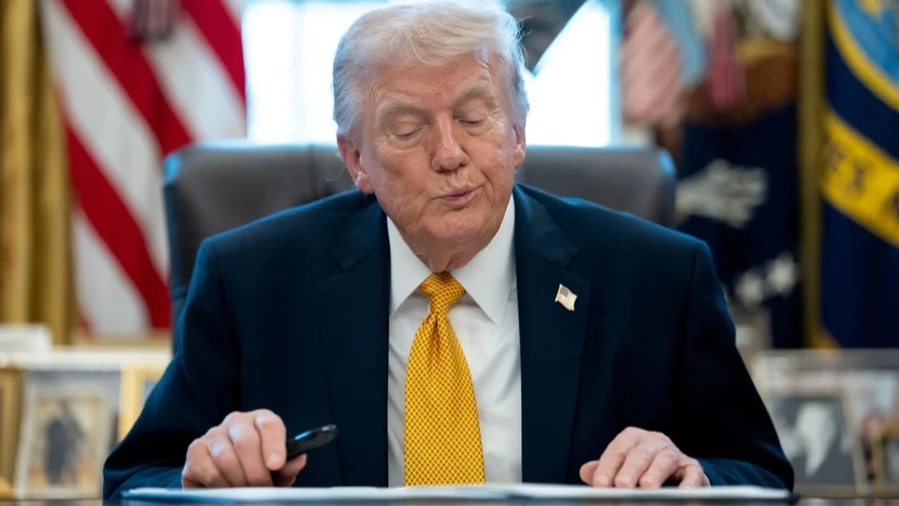
US President Donald Trump signed an executive order on 17 October suspending the application of sanctions, restrictions and tariffs on Russia provided for under the Graham Act. The law was passed in response to Russia's full-scale invasion of Ukraine and codified and expanded sanctions against Moscow. The move matters because Trump can bring the tariffs into force later if he chooses, while for now avoiding a clash with the largest buyers of Russian energy products.
In the order, Trump waives the application of any duties under sections 112 and 113 of the Act and states that a certification has been submitted to Congress saying the waiver is in US national interests. The order formally establishes the tariffs but suspends their application, Bloomberg reported.
What the law provided
On 17 September, the US Congress passed bill H.R. 5334, the Lindsey O. Graham Sanctioning Russia and Iran Act of 2026. It authorises 500% tariffs on Russian goods, secondary tariffs of up to 100% on the largest buyers of Russian oil and gas, and mandatory sanctions against key sectors of the Russian economy. Trump signed it into law on 19 September, setting the first 30-day deadline for implementation at 18 October. Within that period, 100% tariffs were to be imposed on goods from the five largest buyers of Russian oil.
Diesel and opposition
The provisions conflicted with Trump's plan, announced last week, to work with Russian leader Vladimir Putin to bring Russian diesel onto global markets. Trump is trying to lower US diesel prices, which are at record highs a few weeks before the 3 November elections. On 9 October, the Treasury Department's Office of Foreign Assets Control (OFAC) issued General Licence No. 135, allowing transactions involving Russian-origin diesel.
On 14 October, a bipartisan group of 12 senators wrote to Trump calling the diesel deal with Moscow a "betrayal of the people of Ukraine" and urging him to revoke the licence and fully implement the Act. Twenty-two Democratic and Republican members of the House of Representatives made a similar demand. According to Bloomberg, the waiver risks renewed opposition in Congress, including from many Republicans, but it also helps Trump avoid a potential conflict with China, India and Türkiye, the largest buyers of Russian energy.