Trump returns to campaign trail in North Carolina to boost Republican Senate bid
Donald Trump campaigned in North Carolina for Republican Senate nominee Michael Whatley against Democrat Roy Cooper, while also criticizing the Federal Reserve's latest interest rate hike.
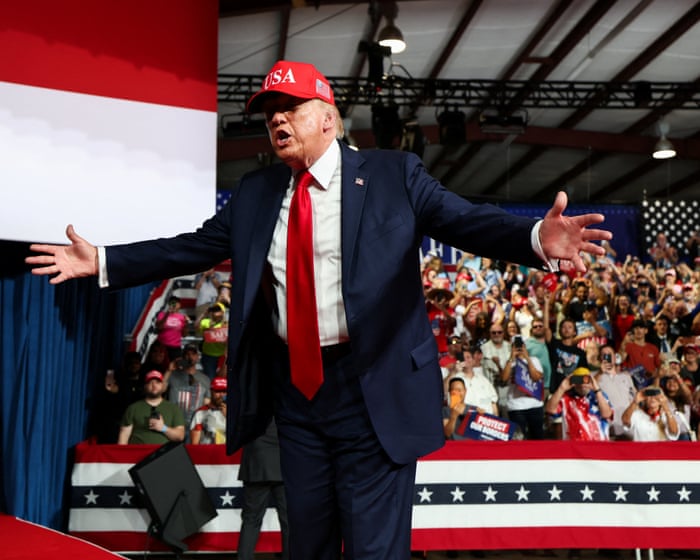
Donald Trump returned to the campaign trail on Wednesday, urging North Carolina voters to "pretend I'm on the ticket" and back Republican Senate nominee Michael Whatley in November's elections. The rally in Gastonia was Trump's first campaign appearance since the Republican party's convention in Dallas last week.
Whatley, a former Republican National Committee chair, is running against Democratic former governor Roy Cooper in what is seen as one of the most consequential Senate races this cycle. With Republican senator Thom Tillis retiring, Democrats see a rare chance to flip the seat in a state that has repeatedly disappointed the party in past elections. Democrats need to win at least four Republican-held seats to take control of the Senate.
Attack on Cooper
Trump framed the Senate race as a referendum on Cooper's record as governor, emphasizing public safety. He referenced the murder of 23-year-old Ukrainian refugee Iryna Zarutska on a Charlotte train last year, falsely claiming the man charged in her killing had been released from prison under Cooper. He also displayed mugshots on screen, drawing an explicit comparison to the 1988 Bush campaign's controversial "Willie Horton" ad against Michael Dukakis.
Trump praised Whatley as the "candidate of law and order" and one of the best people he worked with in government. Whatley in turn called Trump the "greatest president of our lifetime."
Polls have so far shown Cooper leading Whatley in a state where Democrats haven't won a Senate race since 2008. Ahead of the rally, local Democrats criticized Whatley for backing Trump's agenda, including war funding they say is raising costs for families.
Economic backdrop
Trump also attacked the Federal Reserve, which on Wednesday raised its benchmark interest rate by a quarter-point — its first increase since 2023 — citing persistent inflation. Trump called the central bank "very hostile" toward him and its officials a "bunch of politicians," repeating that interest rates were too high.

/nginx/o/2026/09/16/17921123t1hbb50.jpg)