Trump signs order imposing 15% tariff on polysilicon imports
US President Donald Trump has signed an executive order imposing a 15% tariff on polysilicon products, a key material for semiconductors and solar panels, to protect American manufacturers from China's dominance. Beijing has condemned the move and vowed countermeasures.
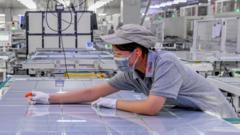
US President Donald Trump on Thursday signed an executive order placing a 15% tariff on imported products made from polysilicon, a critical material used in semiconductors and solar panels. The order also establishes minimum import prices for polysilicon and related goods, following a national security investigation into overseas production.
The measures aim to shield US manufacturers from intensifying competition posed by China's chip industry, a major point of tension between the world's two largest economies. Trump said he had adopted recommendations from Commerce Secretary Howard Lutnick, which included both minimum price levels and the tariff. The new duties are scheduled to take effect in December, and the administration plans to offer incentives to boost domestic output.
In the executive order, Trump argued that the US has long allowed foreign firms to weaken domestic producers in the polysilicon sector. He noted that polysilicon is essential for military equipment and electronics, yet America's share of global production fell from 50% in 2005 to under 2% in 2024. China currently holds a near monopoly on manufacturing the material.
The move is expected to benefit Hemlock Semiconductor and Wacker Chemie, the primary US-based producers of polysilicon.
China's embassy in Washington responded sharply, saying the action "seriously disrupts" bilateral trade and that Beijing will act to protect its companies. The embassy accused Washington of "abusing state power to go after Chinese businesses" and argued that protectionism would not make the US more competitive.
The order comes against a backdrop of fierce competition between the US and China in artificial intelligence, where computer chip production is a key battleground. Both nations have been engaged in a tit-for-tat tariff war that has been on hold since May 2025. Analysts quoted by Chinese state outlet Global Times described the new tariff as the latest escalation in Washington's attempts to curtail China's influence over critical technology supply chains. The US has previously imposed restrictions on imports of drones, humanoid robots and other tech goods.
This week, China announced a series of countermeasures, including tighter export controls on drones, and launched a national security review of imported printers and copiers.


