Trump denies restricting Ukraine's access to Starlink network
US President Donald Trump denied that he or Elon Musk was behind limits on the Starshield internet network in Ukraine, which cut drone speeds. Reuters reported the order came from the White House.

US President Donald Trump has denied restricting Ukraine's access to Starshield, the military version of the Starlink satellite internet service. The limit curbed the speed of Ukrainian drones and weakened the country's ability to defend itself against Russian attacks. "It wasn't me and I don't think it was Elon," Trump said, referring to Starlink owner Elon Musk. He spoke hours after Ukrainian President Volodymyr Zelensky said speeds had not yet been restored.
What Starlink and Starshield are
Starlink is a civilian high-speed internet network run by Musk's SpaceX. Starshield relies on Starlink and is a military-grade service designed for the Pentagon, the US defence department. Musk said Starshield is managed by the US government and that the Pentagon could have been responsible. Reuters, citing two US officials and a Western official, reported that the order came from inside the White House.
On Tuesday night Starlink capped speeds at 100mph (160km/h), so anything moving faster lost its connection to the network. Ukraine was hit the same day by several deadly Russian strikes; about 600,000 people lost power, and communications and energy facilities used by the military were also damaged. A bipartisan group of US senators signed a letter demanding an investigation.
Tension between Washington and Kyiv
The US had earlier warned it could withhold intelligence sharing if Ukraine did not stop hitting Russian oil refineries. Tension was also fuelled by a recent diesel deal between Russia and the US. Zelensky resumed strikes on refineries this week, which Trump criticised three days after announcing a ceasefire on energy infrastructure. Moscow never confirmed that ceasefire.
On Friday Trump told reporters he had a good relationship with Zelensky.
European support
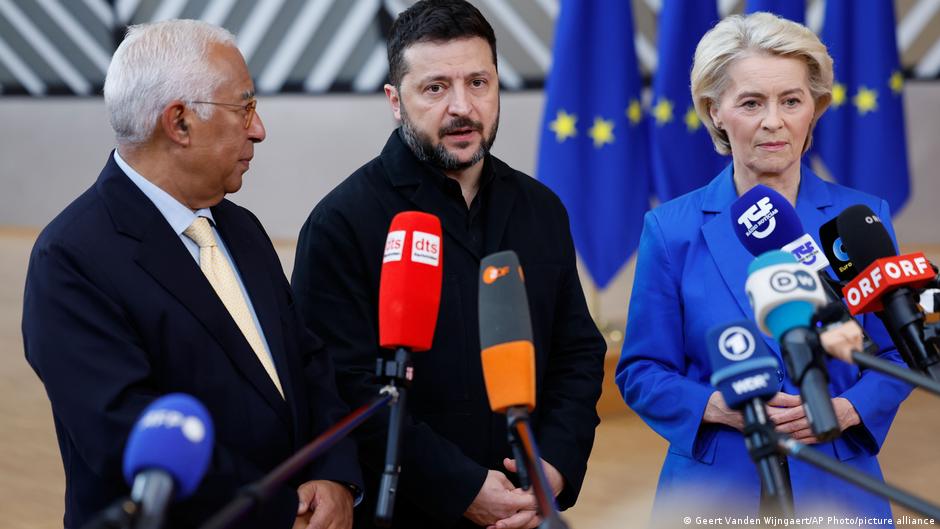
A two-day EU summit ended in Brussels. French President Emmanuel Macron pledged that EU states would not abandon Ukraine. Zelensky told the European Council the war would cost €155bn next year, with at least €70bn needed from the EU.