Trump signs order weighing removal of protections for gray wolves
Donald Trump has signed an executive order giving the Interior Department three months to consider de-listing gray wolves from endangered species protections, drawing sharp criticism from conservation groups.
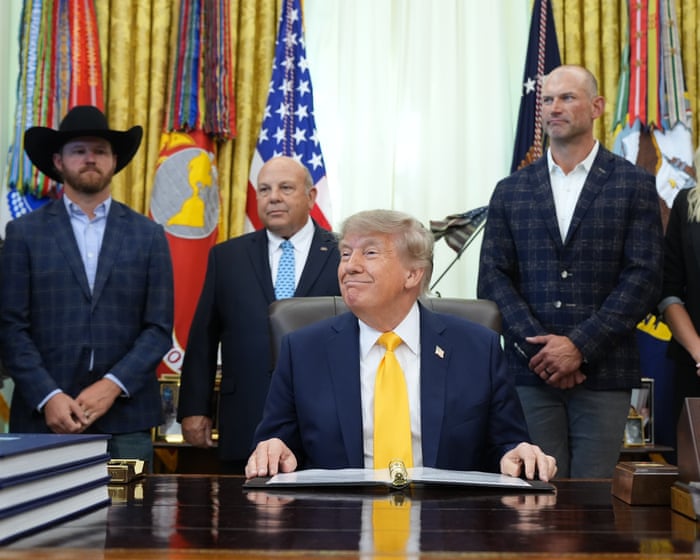
President Donald Trump signed an executive order on Friday instructing the Interior Department to evaluate whether gray wolves and Mexican gray wolves have recovered enough to be removed from Endangered Species Act protections, and to consider easing rules on killing them. Interior Secretary Doug Burgum has three months to make that determination.
The US Fish and Wildlife Service already tried once to de-list gray wolves, but that move remains stuck in litigation after a 2022 federal court ruling restored protections across most of the lower 48 states. Wolves are managed by state authorities in Montana, Idaho and Wyoming, while Minnesota classifies them as "threatened" rather than "endangered."
No such de-listing attempt has yet been made for the Mexican gray wolf, a rarer subspecies reintroduced to New Mexico and Arizona in 1998. Current recovery rules require an average population above 320 for four consecutive years before de-listing can be considered. A count of 319 animals at the end of 2025 marked the first year that threshold-tracking could begin.
Conservationists warn that Mexican gray wolves still suffer from low genetic diversity, and that any premature move to strip protections would face legal challenges. Advocacy groups, including WildEarth Guardians, accused the administration of trying to bypass the framework Congress created to keep species-recovery decisions free of political influence, and of pressuring states to weaken their own wolf protections.
The order forms part of a broader push to support ranchers and the beef industry, as livestock producers have long viewed wolves as a threat to already thin profit margins. Wolves were nearly wiped out across the contiguous United States by government trapping and killing campaigns in the late 19th and early 20th centuries, largely for the same reason.
At the signing ceremony, Trump suggested to ranchers that wolves could now be shot, even though most gray wolves remain federally protected and killing one is generally still a crime. Agriculture Secretary Brooke Rollins acknowledged that Burgum would still need to complete the required regulatory process.