Trump scales back joint drills with South Korea while eyeing new meeting with Kim
The US abruptly cut short joint military exercises with South Korea after Trump ordered a reduction, saying he hopes to meet North Korean leader Kim Jong Un later this year. The move has unsettled Seoul and other regional allies.
The annual US-South Korea military exercise Ulchi Freedom Shield, involving 18,000 South Korean troops and forces from 11 other allied nations, was abruptly halted on Friday with only half its programme completed. The decision came days after President Donald Trump said he had ordered the Pentagon to substantially reduce the drills, calling them "inappropriate and hostile" toward North Korea and costly for the US.
South Korea's Foreign Minister Cho Hyun described the move as a mutual decision but admitted officials had not known in advance of Trump's intent to scale it down. The decision has also unsettled allies such as Taiwan and Japan, which rely heavily on US security guarantees in the region.
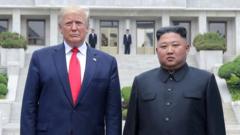
Trump, who has also criticised Seoul for declining to join action against Iran, said he expects to meet North Korean leader Kim Jong Un later this year. While South Korea has long welcomed the idea of renewed Trump-Kim diplomacy, it would not want such a meeting tied to demands for money or military help regarding Iran.
Alliance concerns
Seoul regards the annual exercises as central to the alliance and a sign of US commitment against Pyongyang. According to Jo Bee-yun, a senior research fellow at the Atlantic Council, Trump's unilateral and sudden move has shaken confidence in the US as a reliable ally, with fears he could further reduce the 27,000 US troops stationed in South Korea or abandon the long-standing denuclearisation policy.
Days before the drills, North Korea launched ballistic missiles toward Japan, followed by more launches on Thursday, while reasserting its right to use nuclear weapons. The Trump administration has also increasingly linked security and trade issues, criticising South Korea's troop-hosting payments and the slow pace of a pledged $350bn investment.
Some experts, including Sejong Institute vice-president Cheong Seong-chang, argue South Korea should pursue its own nuclear deterrent, though the government has long viewed this as unnecessary and potentially damaging to its alliances.
President Lee Jae Myung publicly praised Trump's decision and pledged increased defence spending. Meanwhile, Kim Jong Un's sister, Kim Yo Jong, denied knowledge of any recent contact with Trump and reiterated that North Korea will never give up its nuclear weapons. Experts remain doubtful a new Trump-Kim summit will happen soon, given North Korea's deepening ties with Russia and China, including troop and weapons support for Russia's war in Ukraine.
/nginx/o/2026/08/20/17860593t1h6234.jpg)