Trump's cut to joint drills with South Korea leaves Seoul uneasy despite aligning with Lee's goals
US President Donald Trump announced a reduction in joint military exercises with South Korea, a move that aligns with President Lee Jae Myung's push to ease tensions with North Korea but has unsettled Seoul over how it was delivered and what it means for security.
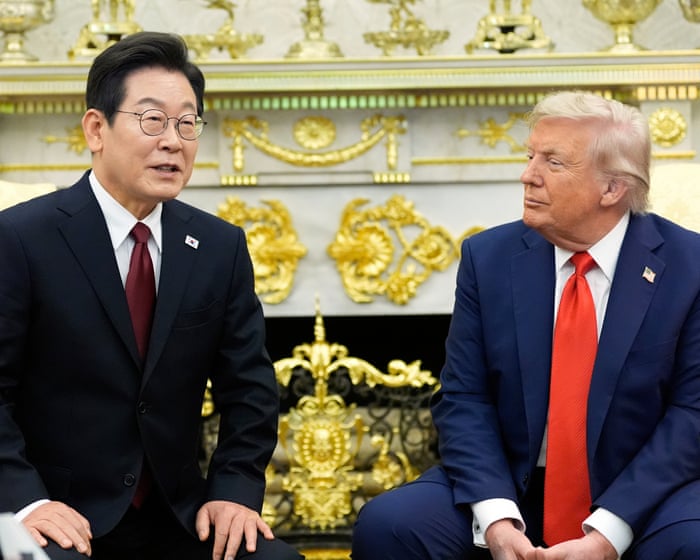
At their first summit in August last year, South Korean President Lee Jae Myung told Donald Trump he would act as a "pacemaker" if Trump became the "peacemaker" on North Korea. The remark reflected Lee's broader approach: scaling back military posturing and repeatedly offering dialogue to Pyongyang, even though such overtures have consistently been rejected, largely over Seoul's insistence on denuclearisation.
This week, Trump's decision to cut joint military exercises with South Korea effectively delivers what Lee had hoped to achieve as a tool for reviving talks with the North. Lee's wider message is that South Korea should take greater responsibility for its own defence and rely less on the US — on Tuesday he renewed calls for wartime operational control of the military and progress on the country's nuclear submarine programme.
Trump announced the cut on social media just hours before the drills were due to begin, in what has become a characteristically blunt and discourteous style of communication.
Political reaction
The move has scrambled South Korea's usual political alignments, where positions are typically shaped by attitudes toward North Korea rather than economic issues. The opposition conservative People Power party called the decision a "security disaster" and warned of a return to so-called "Korea passing", while conservative newspapers, including the influential Chosun Ilbo, criticised both the decision and Lee's government for allegedly inviting it.
Progressive outlets showed less alarm. Hankyoreh objected only to the unilateral and disrespectful way the decision was announced, calling it "regrettable", while Kyunghyang Shinmun suggested the reduction could help create conditions for dialogue with North Korea, provided deterrence remained intact. The ruling party itself has stayed largely quiet on the matter.
Trust in the alliance
Prof Jaechun Kim of Sogang University said the episode is likely to deepen long-building doubts about Washington's commitment to its allies, as US obligations are increasingly seen through a transactional lens. Surveys have shown support for an independent South Korean nuclear deterrent hovering above 70% in recent years, a figure that could rise further after this episode. Kim noted that while Pyongyang would likely welcome friction within the alliance, it is unlikely to prioritise improving ties with Washington, given stronger backing it now receives from China and Russia.