Trump orders cutback of joint military drills with South Korea, citing bond with Kim Jong-un
US President Donald Trump has ordered the Pentagon to scale back joint military exercises with South Korea, saying they are unnecessary given his good relationship with North Korean leader Kim Jong-un. The order came hours before the drills were due to begin.
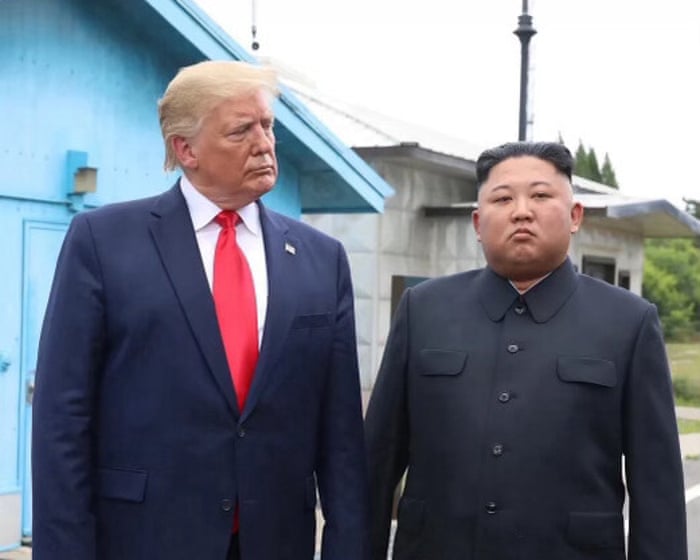
US President Donald Trump announced he had instructed Defense Secretary Pete Hegseth to substantially reduce the joint US-South Korea military exercises, which he described on Sunday evening as "inappropriate and hostile." The order came just hours before the drills were set to begin on Monday.
The exercises in question are the annual Ulchi Freedom Shield drills, one of two major joint exercises held each year by South Korea and the US. Running until 27 August, the drills were expected to involve roughly 18,000 South Korean troops alongside US forces and personnel from 11 of the 18 member states of the United Nations Command, the body overseeing the 1953 armistice that ended fighting in the Korean War.
Trump said he was unhappy about US participation, pointing to what he called his "very good relationship" with North Korean leader Kim Jong-un. He argued the drills were costly and sent an inappropriate, hostile signal to a country he said had been unthreatening and respectful throughout his presidency. Since it was too late to cancel the exercises outright, he ordered them substantially reduced instead. Trump also claimed South Korea had refused to assist with the denuclearization of Iran.
Cheong Seong-chang, vice-president of Seoul's Sejong Institute think tank, suggested Trump could go further after any future meeting with Kim, potentially suspending the drills entirely or cutting US troop levels without consulting Seoul.
However, Leif-Eric Easley, a professor at Ewha Womans University in Seoul, warned that scaling back the exercises would slow South Korea's progress toward taking greater responsibility for its own defense and weaken deterrence against potential conflicts in Asia, noting that the cost savings are marginal while the diplomatic payoff with North Korea is doubtful.
Lim Eul-chul, a North Korea specialist at Kyungnam University, added that Pyongyang is unlikely to see the move as meaningful, since it would only regard a complete cancellation of the joint exercises — not a reduction — as significant.