Ukraine and Moldova further cut water discharge from Dniester reservoir amid drought
Ukraine and Moldova have agreed to reduce water discharge from the Dniester reservoir to 60 cubic meters per second for two weeks as the river critically shallows amid drought. The falling water level also threatens Chisinau's water supply.
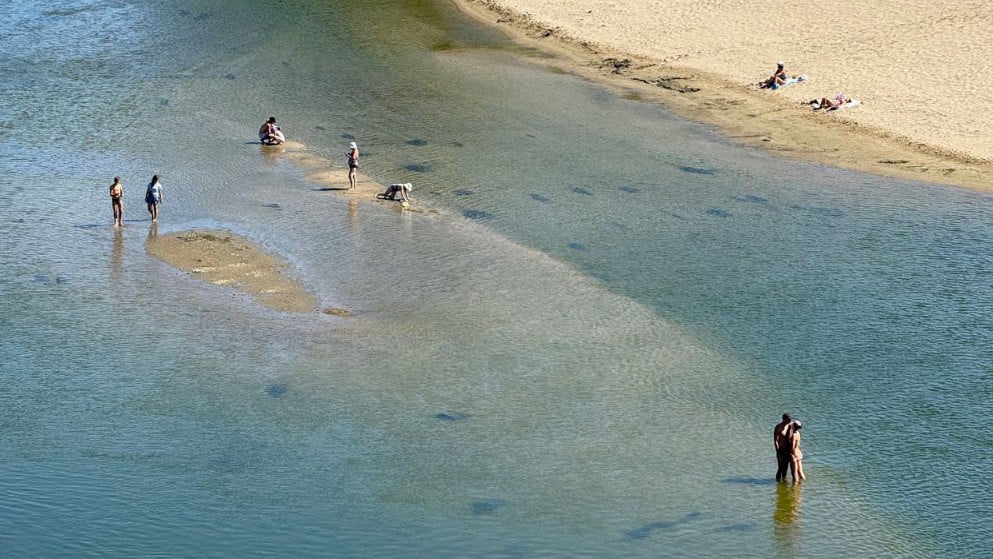
Ukraine and Moldova have agreed on a further reduction of water discharge from the Dniester reservoir due to the critical shallowing of the Dniester River caused by drought, according to Newsmaker, as reported by Ukrainska Pravda.
The Dniester Commission, which includes representatives from both Moldova and Ukraine, agreed to cut the discharge from the current 75 cubic meters per second to 60 cubic meters per second, initially for a two-week period.
A series of reductions
This is not the first cut in recent weeks. Since August 11, Ukraine had already reduced the discharge from 85 to 75 cubic meters per second, a level that was set to last through the end of the month. Before that, the volume had been lowered from 100 to 85 cubic meters per second. The standard norm, fixed under a bilateral agreement from June 2024, is 100 cubic meters per second.
Moldovan government spokesman Dumitru Ciorici said the Ukrainian side had initially requested an even larger cut, down to 50 cubic meters per second. He noted that the water level in the Dniester reservoir, normally around 123 meters, is approaching a critical mark of 112 meters due to drought and lack of precipitation.
Effect on Chisinau's water supply
In mid-August, Moldova's Environment Ministry had already reported a historically low water level in the Dniester reservoir. The reservoir's operating regime directly affects Moldova's ecosystem and water supply, which is why Kyiv and Chisinau are coordinating their steps on the issue.
Chisinau's water supply depends on water from the Dniester. Officials have had to technically adapt water intake facilities to the new conditions, since the station was designed for a water level of 9 meters, which has now dropped to 8.3 meters. Earlier this week, Moldova extended a special regime introduced due to the difficult water and energy situation.