Ukrainian and Polish experts find no WWII mass graves in Ternopil Oblast
Ukrainian and Polish specialists have finished a new search phase at the former village of Puzhnyky in Ternopil Oblast but found no mass grave. They did uncover the foundation of a cemetery chapel, and the area is to be scanned with LiDAR next.
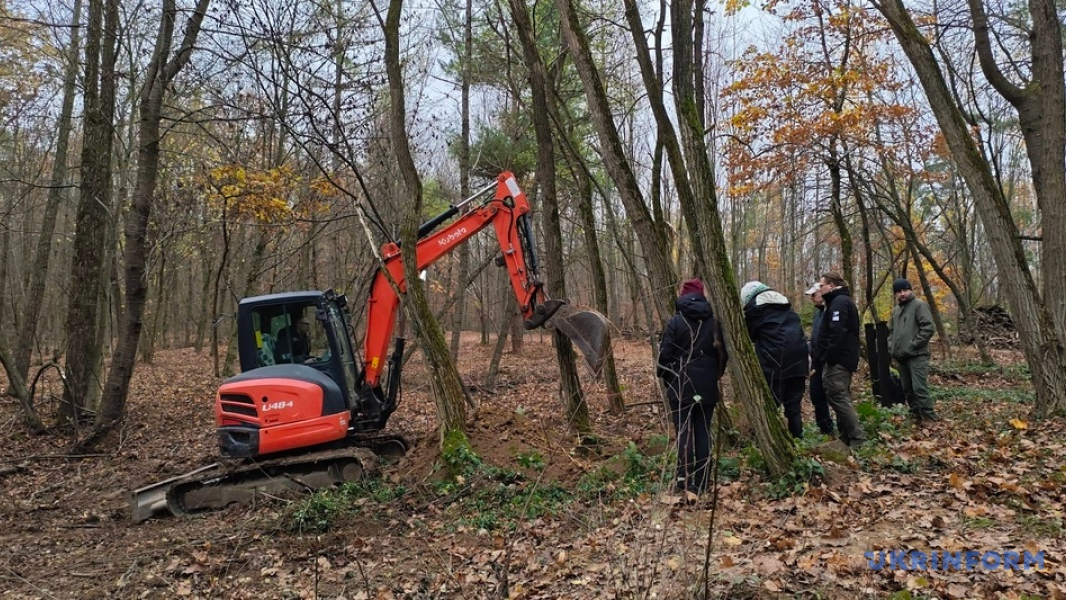
A team of Ukrainian and Polish experts has completed another phase of searching for people killed during the Second World War at the site of the former village of Puzhnyky in Ternopil Oblast, western Ukraine. No mass grave was found, though the work revealed new details about the layout of the site. The information was provided to Ukrinform by the specialised institution Volyn Antiquities.
What was found
The researchers identified the foundation of a cemetery chapel and of an outbuilding. According to the institution's preliminary assessment, the chapel was where funeral services were held for the deceased before burial. Stone masonry that may be part of a road was also discovered.
What comes next
The Puzhnyky area is to be examined further with LiDAR (Light Detection and Ranging), a modern method of scanning the Earth's surface that is expected to help locate the mass grave. A permit for the survey is currently being obtained.
On the Ukrainian side, Volyn Antiquities experts took part. The Polish team included specialists from the Pomeranian Medical University in Szczecin and representatives of the Freedom and Democracy Foundation.
Background
On 4 November, the Ukrainian Institute of National Remembrance announced the start of search operations in Puzhnyky. Between the two world wars, it was a village where ethnic Poles lived as a concentrated community. In February 1945 it came under armed attack; archival sources indicate that some villagers were killed and the village was burned down.
Exhumation work took place here in spring 2025. The remains of 42 people were found and reburied at the old Puzhnyky cemetery in September 2025. In late October 2026, a Ukrainian expedition completed search work in the village of Łasków in Poland's Lublin Voivodeship, where early estimates suggest the remains of more than 40 people were found.