Uzbekistan celebrates 35 years of independence, president unveils decade-long reform plan
Uzbekistan marked the 35th anniversary of its independence with a large ceremony in New Tashkent, where President Shavkat Mirziyoyev laid out an ambitious reform agenda for the next ten years. International and local performers took part in the celebration.
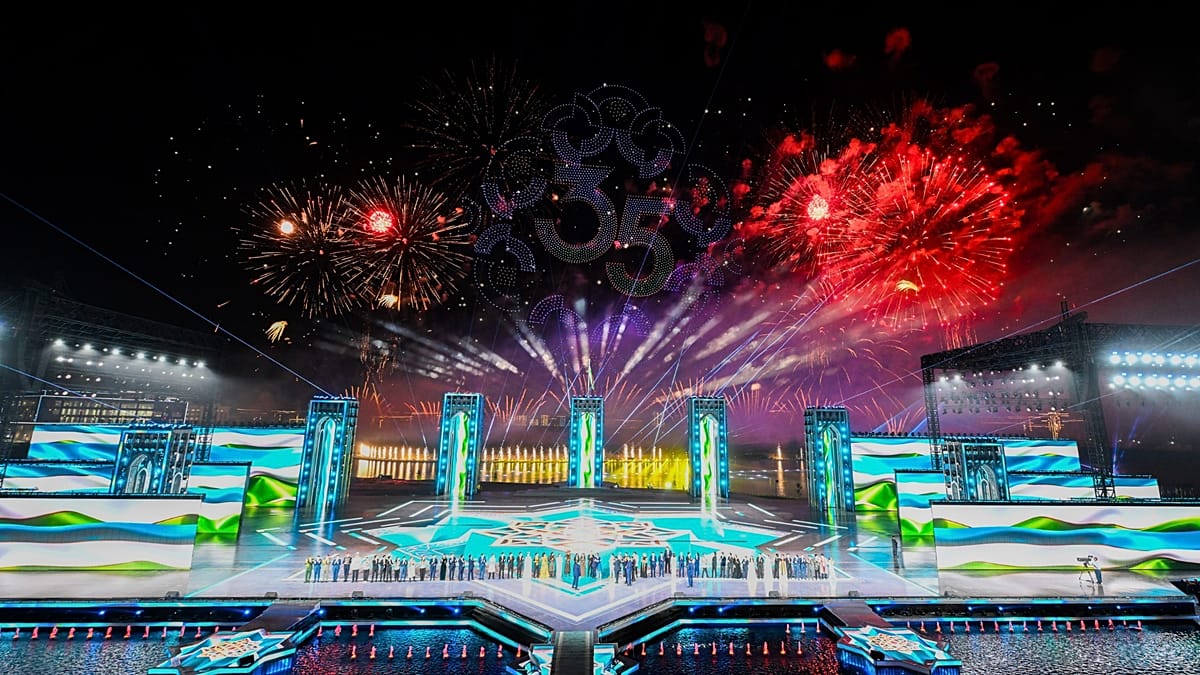
Uzbekistan began celebrating the 35th anniversary of its independence with a large-scale event in New Tashkent, ahead of the official Independence Day on 1 September. The country declared independence from the Soviet Union on 31 August 1991. The ceremony drew Uzbek officials, foreign guests, and performers from Uzbekistan and abroad, including Spanish tenor José Carreras, British soprano Sarah Brightman, and Italian tenor Alessandro Safina, alongside local singers and dancers. The show also featured 3D projections, lighting effects, robots, and a drone display.
The location carried symbolic weight: New Tashkent is a massive urban development being built next to the existing capital, spanning roughly 20,000 hectares and ultimately intended to house two million people. Its first phase, covering 6,000 hectares, is meant for 600,000 residents and will include housing, universities, cultural and scientific facilities, government buildings, business districts, and new transport links.
Achievements and new goals
In his address, Mirziyoyev honoured the Jadids, a reformist Central Asian intellectual movement, and the country's first president, Islam Karimov. He highlighted the elimination of forced and child labour in cotton production, along with the removal of currency conversion and residence registration restrictions. He said annual foreign investment had grown from $2-3 billion to $40-50 billion, while poverty dropped from 35% in 2017 to 4% this year. GDP, originally targeted to reach $160 billion by 2030, is now expected to hit that mark as early as 2026.
For the coming decade, the president announced seven programmes spanning education, healthcare, the economy, the environment, rule of law, local governance, and foreign policy. Targets include attracting $450 billion in foreign investment, raising GDP to $300 billion by 2030, creating two million high-income jobs, and prioritising start-ups, venture capital, and artificial intelligence. Healthcare spending is set to rise to 5% of GDP, while education plans include international standards for colleges and placing at least ten universities among the world's top 1,000. Local mahalla communities are also expected to gain greater influence over neighbourhood-level decisions.
On foreign policy, Uzbekistan pledged to maintain an open, pragmatic approach, deepening ties with Central Asia, the EU, and other regions. From 2027 to 2029, it will chair the Non-Aligned Movement, a group of more than 120 countries, for the first time. The anniversary event closed with a concert and a light and drone show over New Tashkent.