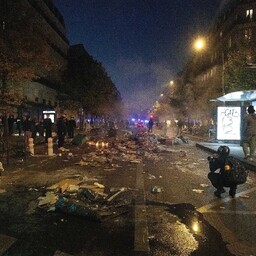
Youth Protests in Germany Turn Violent in the Evening, Police Use Water Cannon and Pepper Spray
Youth-led protests drew tens of thousands of people across Germany on Saturday. In the evening, clashes with police broke out in several places, and a number of officers were injured.
Large youth-led protests took place across Germany on Saturday, 31 October, organised by the movement "GenZ regelt!" ("Gen Z has got this!"). The demonstrations were largely peaceful during the day, but in the evening clashes with police erupted in several cities. Officers used water cannon and pepper spray, while some masked participants threw fireworks, stones and bottles. Several police officers were injured.
The protests were inspired by similar movements in France and Italy, where young people are urging political elites to heed the younger generation's concerns. The movement itself says about 120,000 people took part.
Tension in the evening
In Frankfurt, police were pelted with projectiles and used water cannon and pepper spray while trying to clear protesters. Police said on X that stones and fireworks were still being thrown at emergency services and that action was being taken against the troublemakers. Water cannon were also used in Hamburg and Cologne, where police said demonstrators targeted emergency workers. In Leipzig, pepper spray was used after protests turned violent, and in Bonn one officer suffered minor injuries. In Berlin, an evening protest not organised by "GenZ regelt!" saw police hit with eggs and bottles. Several arrests were reported.
Earlier in the day the atmosphere was mostly festive, with some participants dressed as dinosaurs or Batman because the protests fell on Halloween. Signs read "Time for resistance" and "Merz must go", referring to conservative Chancellor Friedrich Merz.
Demands
The movement's grievances include the high cost of living, poorly maintained schools, government spending cuts and what it sees as politicians making decisions with little regard for young people. It also opposes sharply increased military spending and a new voluntary service model meant to boost troop numbers, fearing it could lead to the return of conscription.
Andreas Rosskopf, an official from the police union, said the main protests were "very peaceful" and that police "intervened very decisively and also forcefully" when violence broke out. He added that major property damage had so far been avoided. The movement explicitly rejects violence.