Massive Communication Failure Halts All Train Traffic in Germany for 90 Minutes
A technical glitch in the GSM-R digital railway radio network brought all passenger and freight trains across Germany to a standstill on Tuesday evening; service resumed after an emergency system was activated.
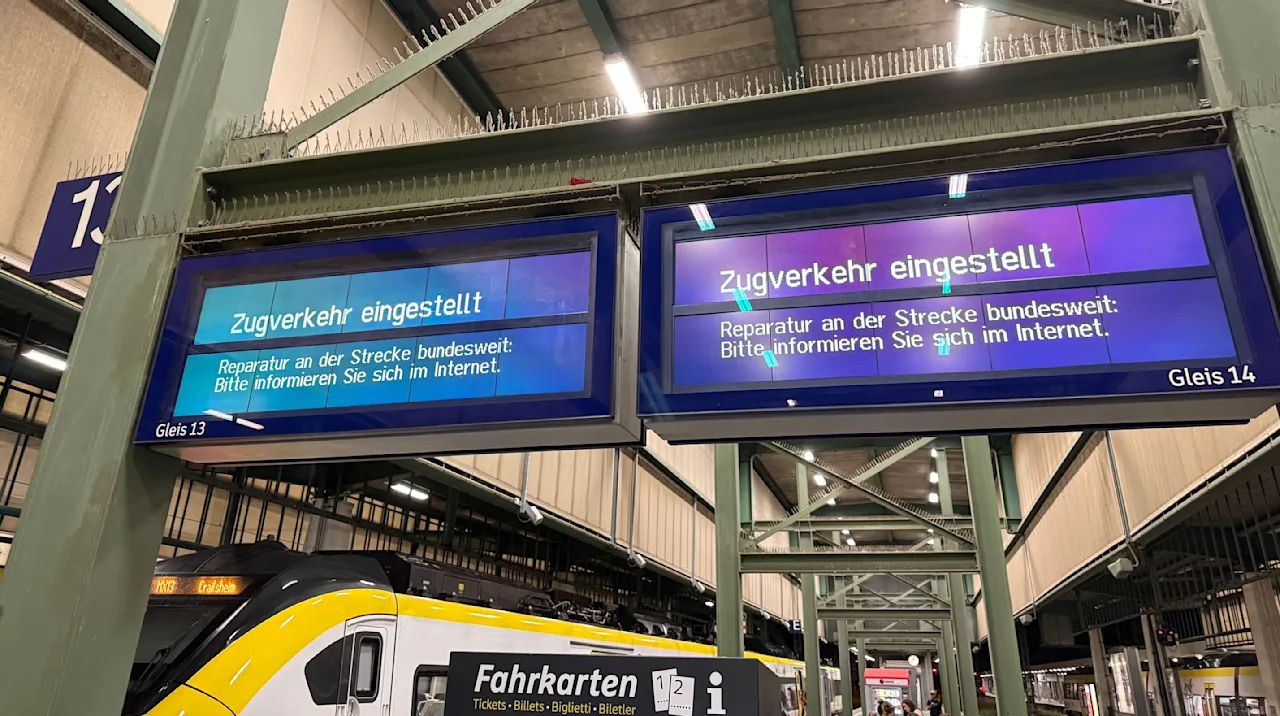
On Tuesday evening, June 23, rail traffic across Germany came to a complete halt. The cause was a large-scale failure in the GSM-R digital railway radio network, which provides wireless communication between train drivers and traffic control centers. Due to the malfunction, all passenger and freight trains were held at stations. Berlin's S-Bahn urban railway was also paralyzed. Huge queues formed at Berlin's main station and other locations. Railway staff advised stranded passengers to wait in the trains and use the restrooms.
After midnight, service began to gradually resume. Deutsche Bahn CEO Evelyn Palla stated: “Following a 90-minute outage, all trains are running again. We were able to stabilize the situation with an emergency system. Now we need to determine the cause.”
To assist passengers, Deutsche Bahn started issuing vouchers for taxis and hotels. In Frankfurt am Main, the railway recommended that Deutschlandticket holders arrange their own taxis or hotels and later apply for compensation of up to €120. Meanwhile, Berlin's S-Bahn warned that delays and cancellations were still occurring on several lines.
This is not the first major rail disruption in Germany. In October 2022, deliberate sabotage (cutting fiber-optic cables) in the north stopped trains for three hours across several federal states. In September 2024, a widespread radio communication failure paralyzed traffic in central Germany, with the Frankfurt hub worst affected. In February 2026, Deutsche Bahn suffered a hacker attack that disabled the mobile ticket booking app and internal communications in ICE high-speed trains for several hours.