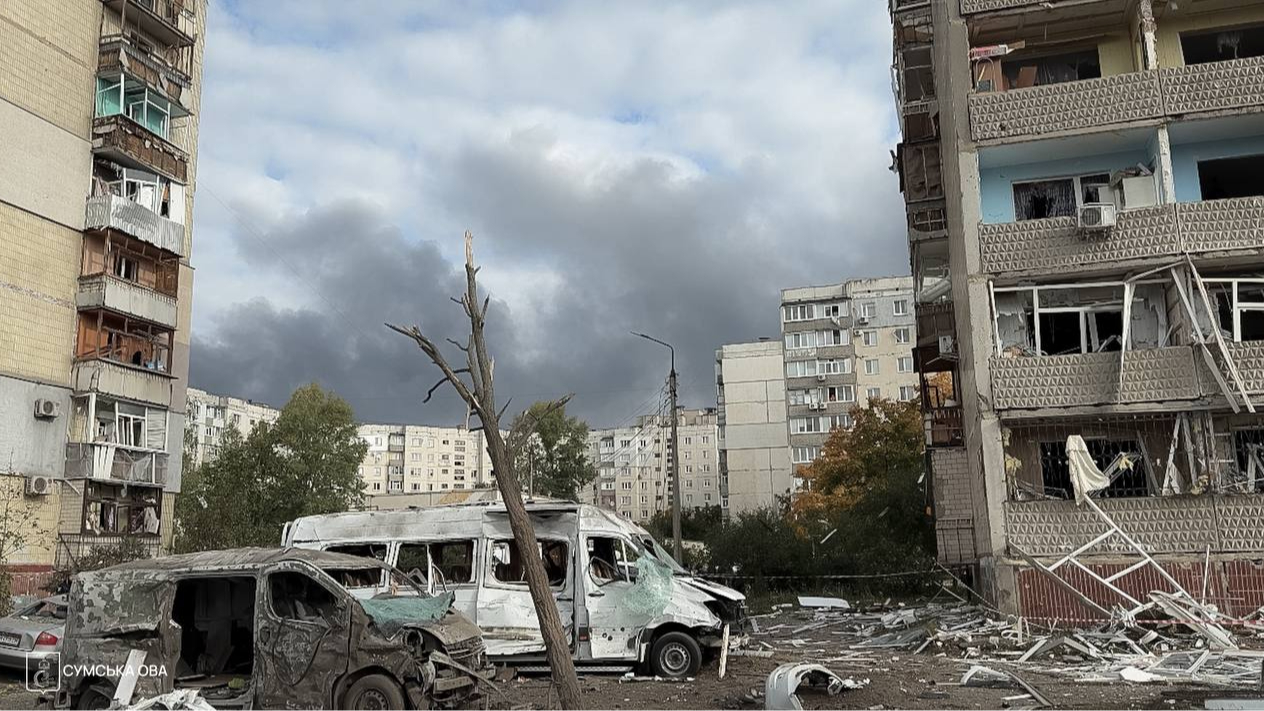
German Chancellor Merz makes surprise Kyiv visit as Russian strikes continue on the capital
German Chancellor Friedrich Merz made an unannounced visit to Kyiv on Monday to discuss military aid and drone production, shortly before Russia struck one of the city's bridges.

German Chancellor Friedrich Merz arrived in Kyiv on Monday for an unannounced visit, his second trip to Ukraine since taking office roughly eighteen months ago. Shortly after he reached the central railway station, Russian forces struck the city's North Bridge, located about a 20-minute drive away. Kyiv's mayor, Vitali Klitschko, confirmed the strike, saying emergency services were responding to damage on the bridge's road surface; no casualties have been reported so far. The attack follows strikes on the South Bridge over the weekend, part of a wave of recent assaults that has left several of the capital's six bridges across the Dnipro river closed this week.
Merz travelled to Ukraine to finalise a drone production agreement between German and Ukrainian manufacturers. He was accompanied by executives from several German defence and energy firms, including Siemens Energy, Hensoldt, Diehl Defence and Quantum Systems, as well as his economy and energy minister, Katherina Reiche. During the visit, he is expected to announce the release of €1 billion in military aid and €350 million to help repair Ukraine's energy infrastructure, much of which has been damaged by Russian strikes and needs restoration before winter.
Tribute at the Maidan
Merz met Ukrainian President Volodymyr Zelenskyy at the war memorial on Kyiv's Independence Square, where the two laid tributes at a site covered with Ukrainian flags and photographs of soldiers killed in the war. In a post on X, Merz repeated his pledge that Ukraine "can count on us," adding that Germany's own security depends on the war's outcome. The visit comes as Merz faces domestic pressure at home, including record-low approval ratings and recent losses for his party in three regional elections. Kyiv, largely spared direct aerial attacks in the war's early years, has come under increasingly frequent strikes in recent months.