German tanks reach Lithuania largely unnoticed after last-minute route change
German military vehicles for exercises in Lithuania were moved by ferry and rail rather than in a road convoy through Poland and Lithuania. The change was meant to avoid giving the Kremlin a propaganda opportunity and to avoid provoking Russia.
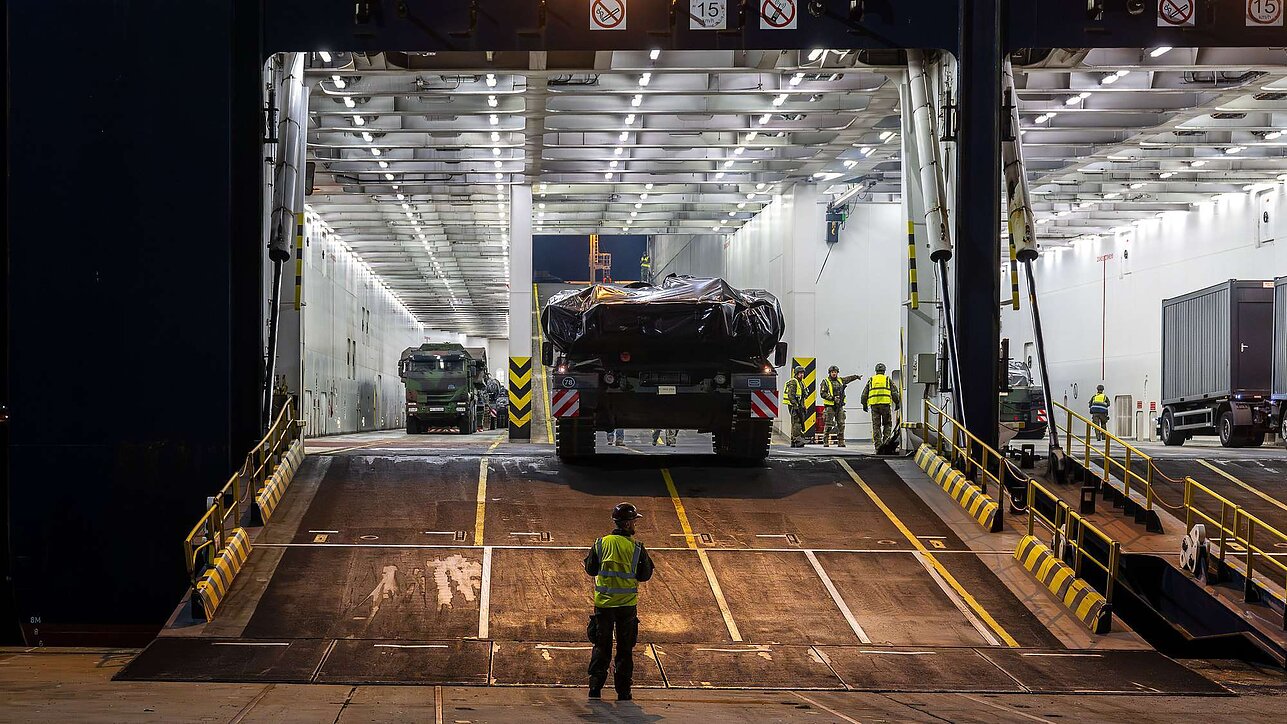
Tanks and other vehicles of Germany's armed forces (the Bundeswehr), meant for the German-organised military exercises Grand Eagle 26 and Freedom Shield II in Lithuania, have arrived in the country almost unseen. The plan had originally been for a convoy to drive through Poland and Lithuania, but at the last minute German authorities chose to send the equipment by ferry and rail. This avoided a situation that could have handed Moscow propaganda material, and it kept tensions on NATO's eastern flank lower.
Why the plan changed
The Bundeswehr took the decision in coordination with NATO. It was first reported on Sunday by Bild am Sonntag, the Sunday edition of Germany's biggest daily, Bild. The paper quoted a source in military circles who said pictures of German tanks heading towards the Baltic states near the Belarusian border would have been a perfect propaganda gift for Putin. There were concerns that visible columns of tanks travelling to NATO's eastern flank could needlessly provoke Russia.
Der Spiegel, a German political weekly, cited Bundeswehr sources as confirming that plans to send a convoy of the 10th Panzer Division through Poland had been dropped. The magazine named a further factor: recent isolated protests by right-wing MPs in Poland against the German armed forces, and a wish not to feed anti-German sentiment further.
Germany's Defence Ministry said that changing the mode of transport is nothing unusual and has to be practised, since it might be needed in an emergency.
How the equipment gets to Lithuania
The Bundeswehr's website does not mention the last-minute change, but it describes in detail how heavy equipment of the 10th Panzer Division was brought to Lithuania. The transport is itself part of the exercises. All vehicles, including infantry fighting vehicles, main battle tanks, lorries and off-road vehicles, cross the Baltic Sea by ferry.
Routes split at the port of Klaipėda. Wheeled vehicles continue by road to the exercise areas: Fuchs armoured personnel carriers, off-road vehicles and a lorry convoy use rural roads in Lithuania. Tracked vehicles, such as Puma infantry fighting vehicles, are moved from the ship straight onto rail tracks, and a special train carries them to Pabradė.
More than 6,000 troops are expected from the German 10th Panzer Division's 45th Armoured Brigade Lithuania and 37th Mechanised Infantry Brigade Saxony. Soldiers of NATO's Multinational Brigade Lithuania will also take part, including personnel from Germany, the Netherlands, Norway, the Czech Republic, Croatia, Belgium and Luxembourg, plus a unit of the Lithuanian Armed Forces.