Is Bulgaria's Rumen Radev shaping up as Europe's next Orbán?
Since becoming Bulgaria's prime minister, Rumen Radev has taken contentious foreign policy steps, halting aid to Ukraine and warming to Russia's Orthodox Church, though analysts are divided on how disruptive he could become for the EU.
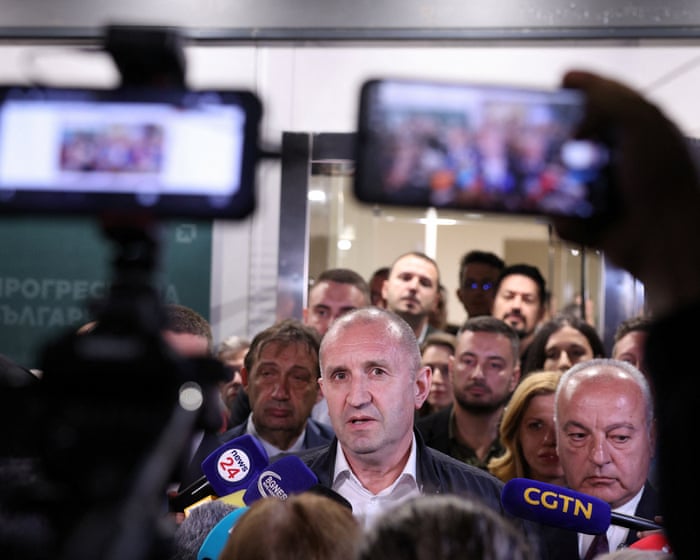
Rumen Radev, who became Bulgaria's prime minister in April after his Progressive Bulgaria party won a sweeping election victory, is increasingly being watched as a potential successor to Viktor Orbán as the EU's chief disruptor, following Orbán's political decline in Hungary. Radev previously served as Bulgaria's president but now holds the more powerful post of prime minister.
His early months in office suggest a transactional approach to relations with the US and Europe, alongside several moves seen as favourable to Russia. In May, Bulgaria suspended military support for Kyiv, with Radev describing Ukraine's cause as "doomed". Bulgaria also declined to join 36 other countries in backing a special tribunal to prosecute Russia over its invasion of Ukraine. In July, visiting Paris, Radev withdrew Bulgaria from the "coalition of the willing", citing limited capacity and arguing that continued military support would only prolong the war. Days later, Bulgaria agreed to host up to eight US aerial refuelling tankers at a military base to support American operations in the Middle East.
At the same time, Radev, who had never previously expressed strong religious views, has developed a new affinity with Orthodox Christianity. His party backed a traditional family values march held on the same day as Sofia's Pride event, and he threatened to veto an EU sanctions package against Russia because it targeted the head of the Russian Orthodox Church.
Analysts in Sofia say Radev's foreign policy lacks ideological consistency, reflecting an attempt to appease a divided electorate. However, unlike Orbán, whose decisions affected the whole EU, experts note that Radev's actions are likely to mainly harm Bulgaria itself, risking the country's isolation from opportunities. Some warn that, given enough time, he could still become a more troublesome figure for Europe.
Domestic challenges may await Radev in autumn, as a newly approved budget freezing the minimum wage and projecting a large deficit has already unsettled part of the public, with protests anticipated in September.