Does DDR5 RAM speed actually matter for gaming?
Paying extra for a faster DDR5 memory kit brings little real-world gaming benefit over budget options, since actual performance is largely capped by the processor's memory controller. For most gamers, even entry-level DDR5 is enough.
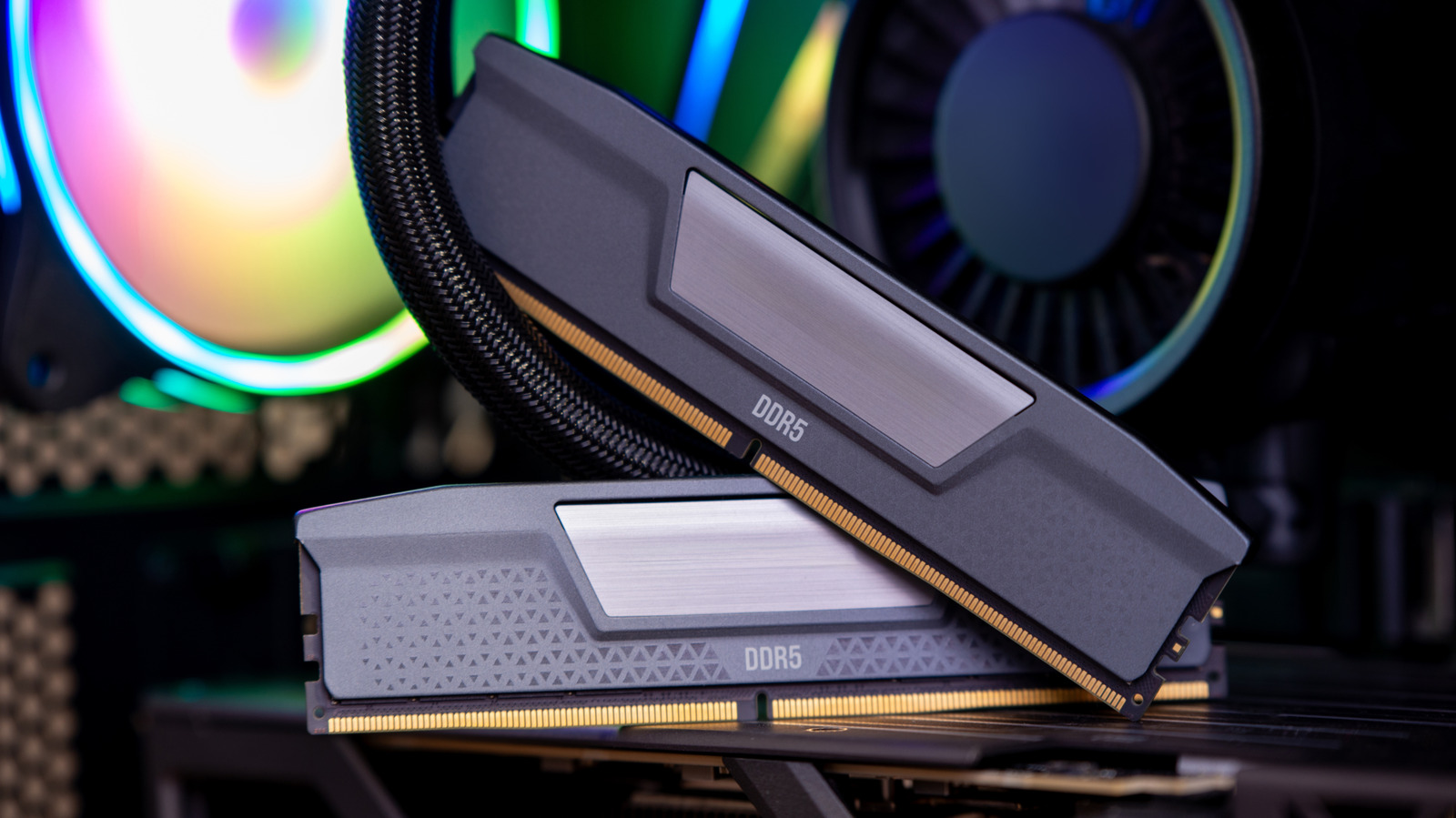
When building a PC, it's easy to assume that a higher DDR5 speed number printed on the box translates directly into better gaming performance. In practice, the gap between cheap and expensive kits is small, even though the price difference can run into hundreds of dollars.
Any DDR5 kit will run today's games without issue. Moving from the cheapest kit to a mid-range one can bring a modest performance bump, but pushing further up the price ladder rarely makes a noticeable difference, except in processor-bound scenarios.
What the numbers actually mean
The number on a DDR5 kit, such as DDR5-6000, refers to the data transfer rate in millions of transfers per second, not the actual clock speed — a common point of confusion. Kits also list a CL (CAS latency) figure, which measures how many clock cycles pass between a request from the processor and the memory's response. Faster-rated kits often carry a higher CL number, so the real-world response time in nanoseconds varies less between kits than the headline numbers suggest.
The processor sets the real limit
The processor plays a major role in how much speed actually matters. AMD validates relatively modest speeds for its Ryzen chips, yet most builders install DDR5-6000 kits because that's roughly the point up to which the Ryzen memory controller can run at the same clock as the memory itself. Installing a faster kit forces the controller to run at half that clock, which can add enough delay to cancel out — or even reverse — the expected performance gain. Intel's newer chips allow for somewhat higher speeds, but the benefit remains limited.
Bottom line
Entry-level DDR5 kits, which trace back to the standard's 2021 launch, remain fast enough for gaming and most everyday computing tasks — in productivity benchmarks, the slowest kit tested landed only about four percent behind the fastest. At the high end, speeds keep climbing, with current standards supporting kits beyond 9,600 transfers per second, though the practical benefit of such kits for typical users remains minimal.