More games, more controversy: Has the 2026 World Cup been a success?
The 2026 World Cup, with 48 teams and various changes, has sparked both positive and controversial reactions. The article examines expansion, hydration breaks, politicization, and VAR.
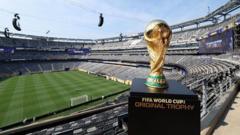
FIFA president Gianni Infantino promised the 2026 World Cup would be the "biggest event in the history of mankind," likening it to 104 Super Bowls in one month. Now that the tournament is over, it's time to evaluate whether that promise was fulfilled.
For the first time, the World Cup featured 48 teams, including debutants Curacao, Cape Verde, Jordan, and Uzbekistan. Cape Verde, a tiny archipelago with 530,000 people, earned draws against Spain and Uruguay and advanced to the knockout rounds. However, the group stage saw 72 matches—more than an entire World Cup used to have—to eliminate just 16 teams. FIFA's decision to use head-to-head results as the first tiebreaker instead of goal difference led to intentional draws.
FIFA introduced a new seeding system to keep the top four ranked teams—Argentina, England, France, and Spain—from meeting before the semifinals. While it didn't prevent these four from reaching the last four, it forced a group swap so Argentina and Spain could only meet in the final. The seeding had no real impact as the teams were already separated in groups.
Mandatory three-minute hydration breaks, intended for player welfare, became a cash cow for broadcasters. Even in air-conditioned stadiums, breaks were mandatory, allowing TV channels outside the UK to sell ads. An average 30-second ad on Fox Sports cost $200,000–$300,000, rising to $750,000 for USA matches and the final stages. Coaches used them as tactical timeouts, altering several games. UEFA has ruled out such breaks, but they are likely to return for the next World Cup.
FIFA's chief of referees, Pierluigi Collina, implemented stricter rules on throw-ins, goal kicks, and substitutions to speed up play. Compared to 2022, the average match length dropped from 101 minutes 22 seconds to 96 minutes 24 seconds, while ball-in-play time rose from 57.4% to 60.4%. The flow improved.
Despite high ticket prices, attendance reached 99.7% capacity, with a record 6,527,410 fans. However, ticket prices sparked controversy—the attorneys general of New York and New Jersey subpoenaed FIFA over pricing practices. Fans were initially banned from bringing water bottles, but FIFA reversed the policy.
The World Cup faced politicization from the start. Supporters of several nations faced US immigration bans. Somali referee Omar Artan was denied entry at Miami Airport. Iran's team was only allowed in the country for 24 hours per game. The biggest political storm came when US President Donald Trump called Infantino to overturn Folarin Balogun's red card. His suspension was deferred for 12 months—a first in World Cup history.
VAR ran smoothly in the group stage but became inconsistent in the knockout rounds. There have been 37 VAR interventions (0.36 per game), similar to Qatar (0.37) and higher than the Premier League (0.29). However, decisions were made faster than in domestic football.