Webb telescope captures its first 'bulge fossil fragment'
The James Webb Space Telescope has confirmed that the region Terzan 5 is not a globular cluster but a 'bulge fossil fragment,' offering new insights into the formation of the Milky Way.
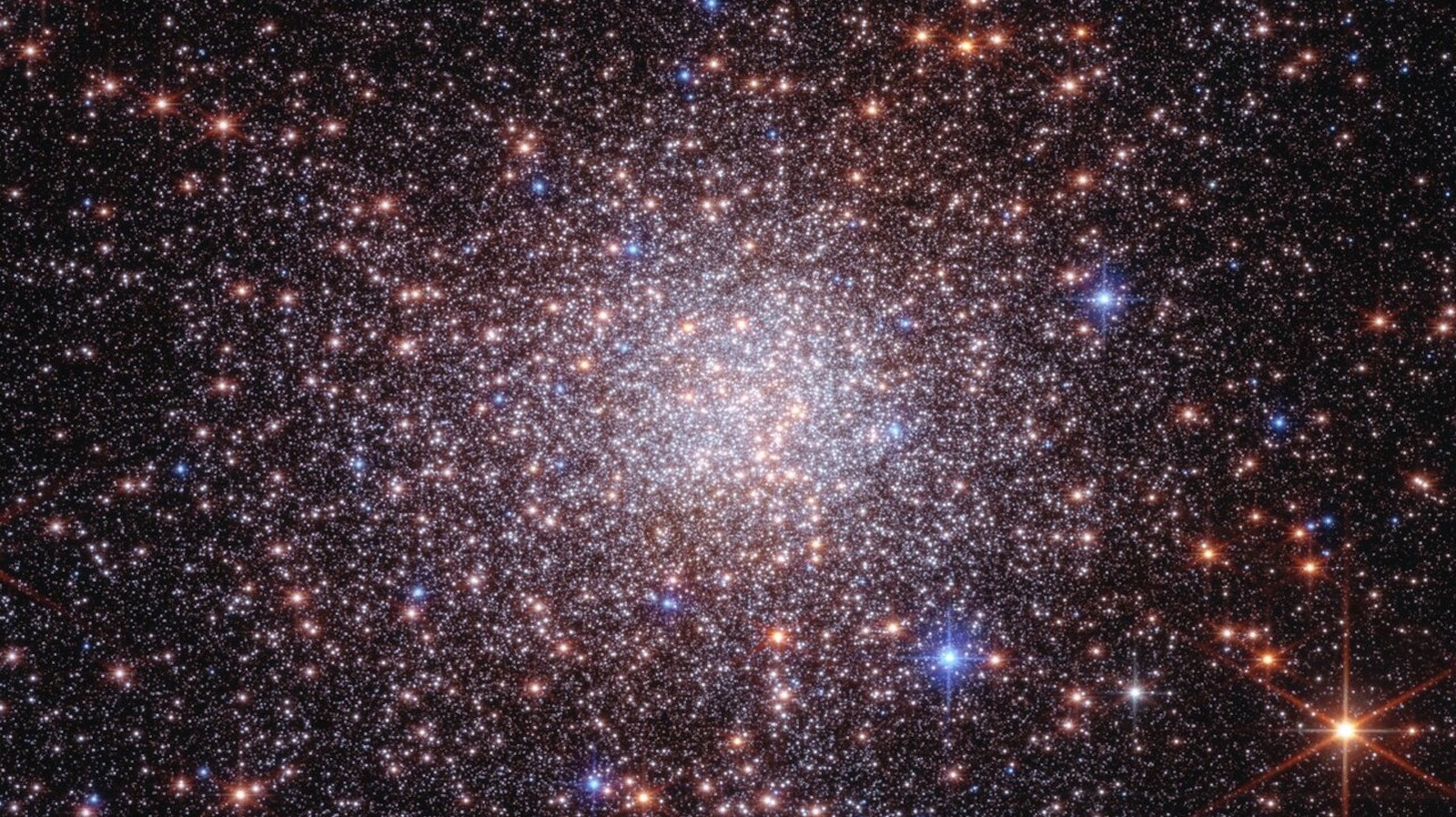
Astronomers using the James Webb Space Telescope have obtained new data on the region known as Terzan 5, revealing it is not a simple globular star cluster as previously thought. Combining Webb observations with archival data from the Hubble Space Telescope, the team found that Terzan 5 has experienced at least four distinct phases of star formation.
The study revealed two older star populations formed 12.5 billion and 4.7 billion years ago, as well as two more contemporary populations formed 3.8 billion and 2.5 billion years ago. This diverse composition indicates that Terzan 5 is not a typical globular cluster, which usually contains only one ancient star population.
Researchers refer to Terzan 5 as a 'bulge fossil fragment' because it likely remains from ancient gas clumps that built the Milky Way's central bulge. 'For some reason, this peculiar clump of stars formed separately from the bulge and was not destroyed as the bulge itself formed,' explained Francesco R. Ferraro, principal investigator of the Webb observations from the University of Bologna.
Co-author Barbara Lanzoni, associate professor at the University of Bologna, added that based on observations and simulations, scientists think early galaxies had huge discs of gas that fragmented into clumps and formed stars. These clumps migrated to the centers of galaxies and many merged to form their bulges. The findings were published in the journal Astronomy & Astrophysics.