UK's 'severe' wildfire phone alert leaves public shaken
A loud government emergency alert about wildfires sent to phones across England and Wales on Friday sparked widespread public reaction, amid a record year of blazes and mounting drought pressures.
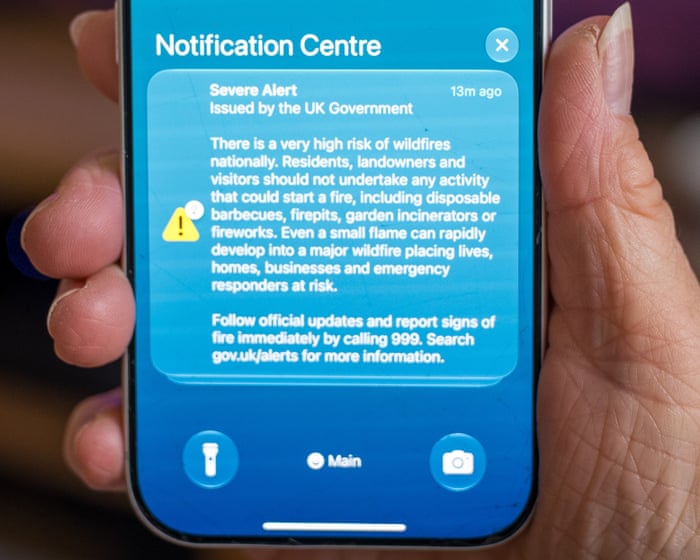
On Friday evening around 7pm, phones across England and Wales blared with a loud "severe" emergency alert warning of wildfire risk. Former Conservative cabinet minister Thérèse Coffey, who was nine miles from a nuclear power station at the time, said on X she had expected something more specific rather than a generic wildfire message.
The alert triggered a wave of reaction on social media, with some users sharing memes while others criticised what they saw as insufficient government action on climate change. Academic John Ritzema called the alert a "massive overreach", arguing the system should be reserved for genuinely dire emergencies. Coffey echoed the concern, warning that overuse of such alerts risks a "cry wolf" effect that could undermine future warnings.
Even broadcasters were caught off guard — the alert sounded live during BBC's The One Show, with host Ronan Kemp remarking on what sounded like a fire alarm. Environmentalist Chris Packham used the moment to promote a parliamentary petition calling for a nationwide briefing on climate and nature risks.
The alert came after Andy Burnham visited Stourbridge in the West Midlands earlier on Friday, where fires had destroyed homes and injured residents. The public was warned that Britain is currently a "tinderbox" and should brace for a difficult weekend. It has been a record year for wildfires in England and Wales, with cases already surpassing the 1,017 recorded throughout 2025. Fire services declared 11 major incidents within a single 24-hour period starting Thursday.
Residents were urged to avoid barbecues, campfires and fireworks, and to call 999 immediately if they spot a fire. London mayor Sadiq Khan urged that net zero efforts not be slowed, stressing the severity of the climate crisis. Burnham announced a temporary nationwide ban on disposable barbecue sales and an additional £65m in funding for farmers affected by drought. About 100 military personnel were deployed to south Wales, with another 100 due to arrive, to help stretched emergency services with water distribution and logistics. Britain's cereal harvest is on track to be its worst since comparable records began in 1984.