Tree-shaped natural pattern spotted in the sand on Ventspils beach
A woman photographed a branching, tree-like pattern in the sand on the beach in Ventspils, Latvia. Known as a dendritic pattern or “sand tree”, it forms when water runs over wet sand.
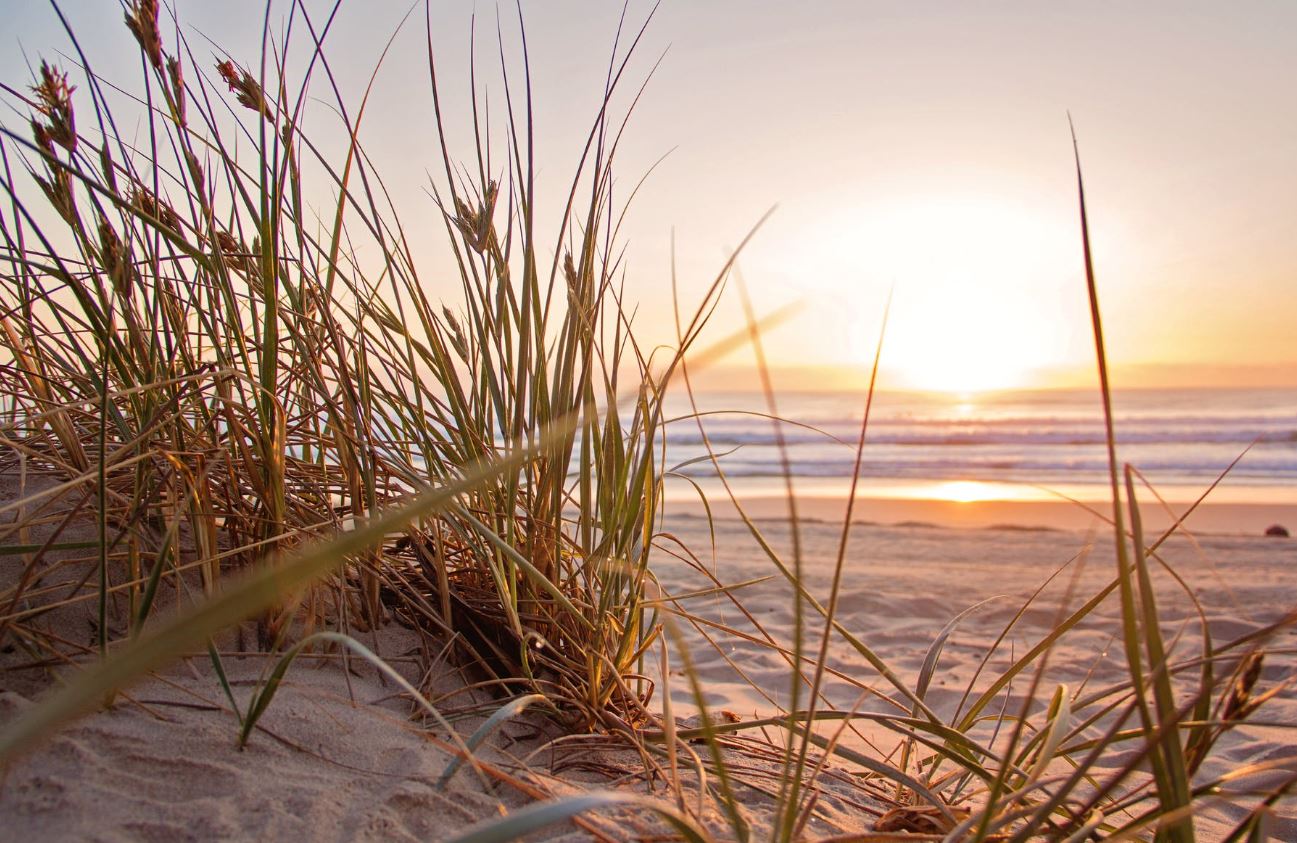
On the beach in Ventspils, on Latvia's western coast, a local resident has noticed an unusual natural formation: a drawing in the sand with a trunk, branches and fine offshoots that resembles a tree. The phenomenon is known as a dendritic pattern, or a “sand tree”. The photographs were posted on the social network Threads by a woman named Kristīne, and they drew a warm response from commenters.
How a “sand tree” forms
The pattern appears when water flows over wet sand and washes out tiny, branching channels. When the water recedes, a design remains in the sand that sometimes looks like the silhouette of a tree. Such formations vary in size and shape, and they can be seen only under certain conditions, until the next waves or wind change the sand surface.
Similar branching patterns occur in nature on a much larger scale. Seen from above, river and stream drainage systems often resemble tree branches, because smaller streams gradually merge into larger ones. On a beach, the same process can produce a miniature river network.
Reactions from commenters
Kristīne herself said she had seen such a formation for the first time. Some commenters wrote that they had never seen anything like it, while others said they had noticed similar sand patterns on other beaches. One woman wrote that on the North Sea coast these sand trees are frequent and sometimes very large and heavily branched. Kristīne added that people sometimes call them “low-tide trees”. According to the commenter, on the North Sea coast the patterns appear at low tide, when the water retreats far from the shore.
Differences between the seas
On the North Sea, the formation of such patterns is often shaped by pronounced tides, while in the Baltic Sea these fluctuations are much smaller. Along the Latvian coast, changes in water level are mainly linked to wind, waves and water moving along the shore. For this reason, conditions in which unusual patterns form in the sand can also arise in Ventspils after the water recedes.