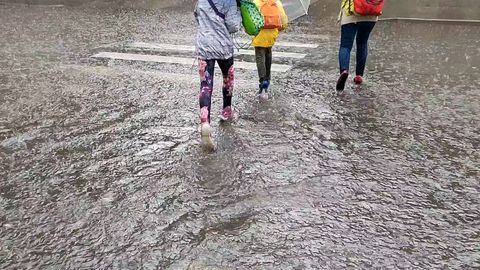
Storm batters Latvia: about 254,000 households lose power, transport disrupted in Riga
A powerful storm swept across Latvia on Saturday evening, felling trees and cutting power to roughly 254,000 customers, while emergency services logged over a thousand storm-related calls by 11 p.m. Public transport in Riga was also disrupted.
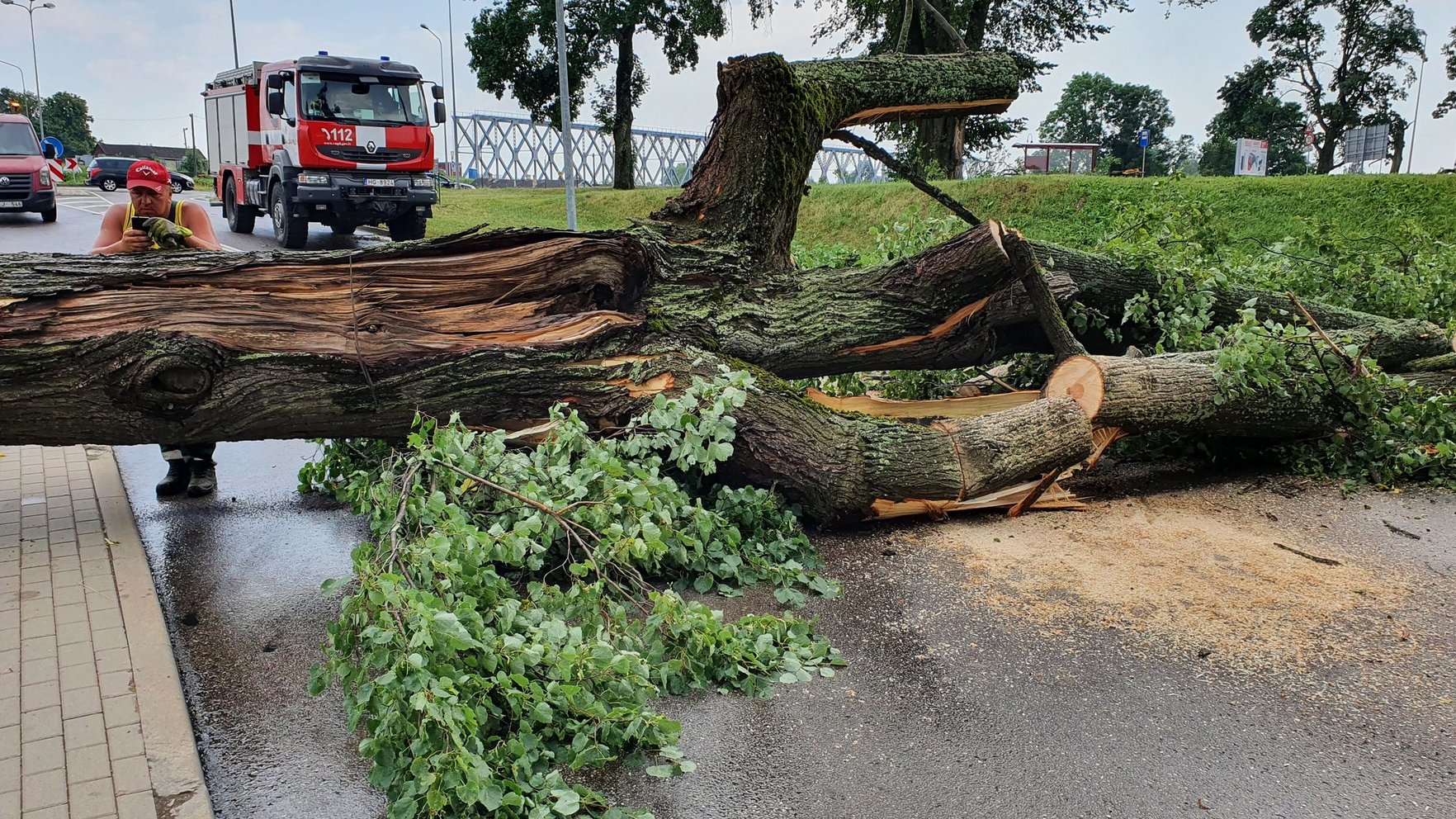
A strong storm moved across Latvia on Saturday evening and into the night, with wind gusts reaching 25–30 meters per second in much of the country and even higher along the Vidzeme coast. Meteorologists note that such wind strength causes far greater damage in summer, when trees are in full leaf, than equally strong winds do in winter.
The strongest gust recorded by 6 p.m., 26 meters per second, was measured in Ventspils. Wind direction shifted across regions as a cyclone center moved near Riga and western Vidzeme during the evening.
Power outages
By midnight, power supply was disrupted for about 254,000 customers of distribution system operator Sadales tīkls. Extensive damage was also reported on the lines of transmission system operator Augstsprieguma tīkls, affecting a large number of customers in several municipalities, including Olaine, Jelgava, Ķekava and Madona. Some areas, such as Pļaviņas and Ērgļi, have already had power restored. The companies warned that restoring supply in more complex cases could take longer than 24 hours, and urged residents to stay away from damaged power lines or flooded electrical infrastructure, and to shut off power in advance if their property is at risk of flooding.
Transport disruptions and rising emergency calls
In Riga, several public transport routes were disrupted after trees fell onto overhead lines and roadways — tram route 11 and bus route 36 (in both directions) were halted, while tram routes 1 and 10 were quickly restored.
By 11 p.m., the State Fire and Rescue Service had received 1,076 calls to the 112 emergency line related to storm damage, most of them in Latgale (340), including Daugavpils and Augšdaugava municipality. Zemgale, Riga, Kurzeme, the Riga region and Vidzeme followed. To handle the rising number of calls in Daugavpils, three additional crews were deployed, with some calls redirected to volunteer firefighters and municipalities. The EU's Copernicus satellite mapping service was also activated to support monitoring of the situation. Residents were urged to reconsider planned activities, stay indoors and follow official updates.