Hurricane Isaias hits Florida's northwest coast, leaving thousands without power
Hurricane Isaias came ashore near Destin, Florida, on Friday evening, causing damage along the Gulf Coast. Three US states declared emergencies and nearly 500,000 customers lost power.
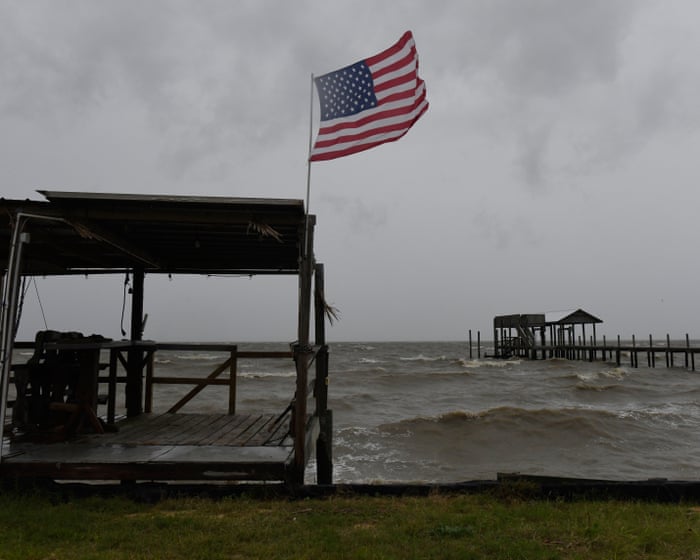
Hurricane Isaias made landfall near Destin, in the US state of Florida, at about 9.30pm Eastern Time on Friday 9 October. It is the first Atlantic hurricane of the 2026 season. None of the eight earlier named storms this season grew stronger than tropical storm status.
The US National Hurricane Center (NHC) in Miami said the storm struck as a category 2 hurricane with winds of up to 105 mph (165km/h). Two hours later it was downgraded to category 1. Earlier on Friday it had peaked as a category 3 storm, and forecasters had expected it to weaken.
Damage and warnings
In Pensacola, about 80km west of Destin, an Agence France-Presse reporter saw wind tear roofs off homes and businesses and snap tree branches as power failed. A gust of up to 164km/h was recorded at Pensacola city hall, and at Panama City Beach the water level was 1.64 metres above average.
The NHC warned of a life-threatening storm surge and flash flooding spreading inland. Water could rise as much as 2.1 metres along the Alabama-Florida line. The storm is forecast to cross Alabama towards the Tennessee Valley over the weekend, with strong gusts also possible in northern Georgia. By Friday evening nearly 500,000 customers in Alabama and Florida had lost power.
Response
The governors of Florida, Alabama and Mississippi declared states of emergency and urged some coastal residents to evacuate. Florida governor Ron DeSantis told people not to travel on the roads. Alabama governor Kay Ivey said President Donald Trump had approved the emergency declaration for her state, which should ease federal assistance.
Florida's National Guard deployed roughly 5,000 personnel. Some prisons were evacuating inmates, and most flights were grounded at several airports in the Florida Panhandle. Oil and gas producers shut down a significant share of offshore production in the Gulf, which accounts for almost 15% of crude oil pumped annually in the US.