Parts of Latvia see nearly a month's worth of rain in a single day
Data from the Latvian Environment, Geology and Meteorology Centre show that rain clouds crossing Latvia on Saturday left parts of the country with rainfall close to the average monthly norm. The episode points to an unusually intense and prolonged rain event within just one day.
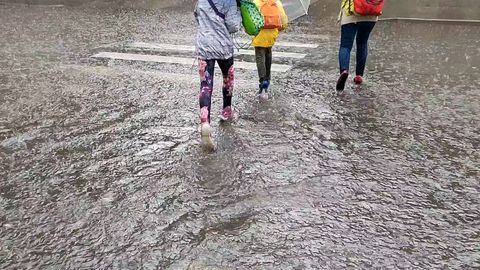
Rain clouds moved across Latvia on Saturday, leaving behind unusually high rainfall totals in several parts of the country. According to information compiled by the Latvian Environment, Geology and Meteorology Centre (LVĢMC), the amount of rain that fell in a single day in some areas came close to matching the typical average norm for an entire month.
LVĢMC is the country's main authority responsible for monitoring weather and hydrological processes, and its figures are commonly used as a benchmark for assessing how unusual a particular weather event is compared to long-term averages. When a single day's rainfall approaches the volume normally expected over a full month, it signals an especially intense and sustained rain episode, a occurrence that is relatively uncommon.
Uneven distribution across the country
The source information indicates that this intense rainfall was not spread evenly across Latvia — the phenomenon is described as having occurred "in places," suggesting that some regions received significantly more precipitation than others. This is consistent with the typical behavior of rain cloud systems, where certain areas absorb heavier rainfall while neighboring regions experience comparatively calmer conditions.
The source text does not specify an exact rainfall amount in millimeters, nor does it name the specific municipalities or towns where the phenomenon was most pronounced. It also does not mention whether the heavy rain caused any consequences, such as flooding or disruptions to traffic.
LVĢMC rainfall data of this kind is regularly used to evaluate weather trends and compare them with previous years, helping track whether Latvia is experiencing unusual or extreme weather patterns.