Vinnytsia surgeon uses titanium implants to save wounded soldiers' arms from amputation
Yurii Lazarenko, a lieutenant colonel in Ukraine's Medical Forces, fits wounded soldiers with custom-made titanium shoulder implants at a military hospital in Vinnytsia. Since 2023 he has performed 60 operations on the shoulder and shoulder joint.
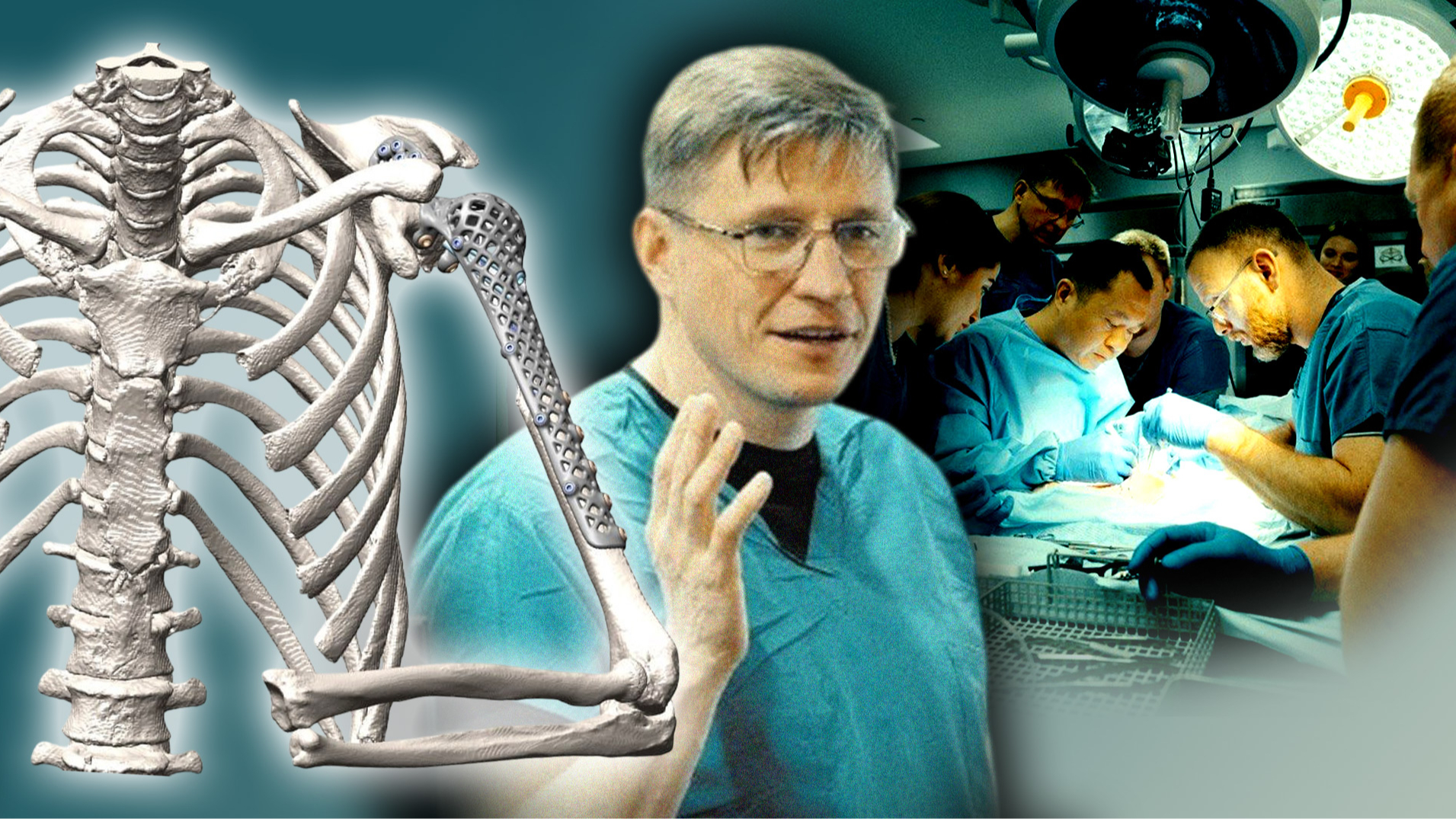
Yurii Lazarenko, a lieutenant colonel in the Medical Forces of Ukraine's Armed Forces and head of the trauma department at the Military Medical Clinical Center of the Central Region in Vinnytsia, fits wounded soldiers with custom-made titanium implants to save their arms from amputation. He has 22 years of medical practice and has worked both at the front and in the rear during the war.
A standout case
Lazarenko especially remembers a soldier from the 72nd Brigade whom he operated on in early 2024. Mine fragments had almost destroyed the man's shoulder, and the arm was hanging on skin and tendons. The shoulder implant surgery succeeded, but an hour later the patient's heart stopped; he was saved. A year later the soldier sent the doctor a video of his rehabilitation: he can lift objects with the arm and even do push-ups.
The new protocol
Lazarenko says about 17% of the injuries his patients arrive with involve the shoulder or shoulder joint. Standard prostheses do not work in such cases, so he developed a new procedure: first a CT scan, then a 3D model of the implant, and then a titanium implant made to that model by the Ukrainian company Velta Medical. The charity foundation "Tykho" funds implants through its Rebone project. In 20% of the operations amputation was avoided; in the rest, the arm was kept but was not functional.
Workload and skepticism
According to the surgeon, before the full-scale invasion the department performed up to 20 operations a week; now it is 25–30 a day. He has presented his approach to doctors in the US and Germany, but some colleagues, including in Ukraine, remain skeptical. Lazarenko acknowledges the method is relatively new and points to risks such as implant rejection or infection, but stresses that patients are under constant monitoring. He plans to defend a new scientific paper and become a professor.