WP: Ratcliffe secretly went to Moscow to warn Russia against exploiting perceived U.S. weakness
CIA Director John Ratcliffe made an unannounced trip to Moscow on August 25, the first such visit by a U.S. intelligence chief since Russia's full-scale invasion of Ukraine began. Washington Post sources say the goal was to dispel Kremlin beliefs that the U.S.-Iran conflict left Washington unable to engage on Ukraine.
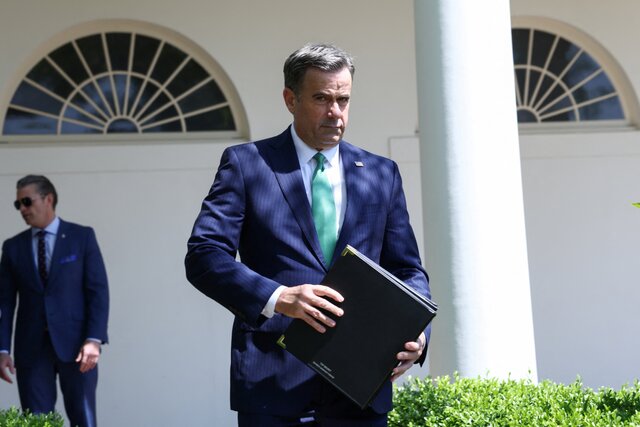
CIA Director John Ratcliffe traveled to Moscow on August 25 aboard a U.S. military transport plane, marking the first visit to Russia by the head of a U.S. intelligence agency since the start of the full-scale war in Ukraine. The trip was not announced beforehand and took place under heavy secrecy. Journalists spent hours trying to identify who had landed in Moscow, while the Kremlin insisted no meetings with U.S. officials were planned that week.
Several days later, it remained unclear whether Ratcliffe had met with Russian President Vladimir Putin. Kremlin spokesman Dmitry Peskov described the visit as "communication through intelligence service channels." Sergei Naryshkin, director of Russia's Foreign Intelligence Service (SVR), confirmed a meeting took place and said he and Ratcliffe discussed matters within the intelligence services' purview, calling it nothing unusual. U.S. President Donald Trump likewise described the trip as routine. Neither Moscow nor Washington has officially disclosed what was discussed.
Multiple theories on the purpose
Russian and foreign experts consider the trip highly unusual, and Western outlets have offered differing explanations citing senior sources. The Wall Street Journal and Politico reported that Ratcliffe warned the Kremlin against attacking NATO members, particularly Estonia, Latvia and Lithuania, and urged Russia to reduce military and economic support for Iran, which is at war with the U.S. The New York Times reported that Ratcliffe met with FSB Director Alexander Bortnikov, shared a grim assessment of Russia's position in the war against Ukraine, and pressed Moscow to open peace talks.
The Washington Post, meanwhile, reported that the Kremlin believed the U.S.-Iran conflict had left Washington "exhausted and unable to intervene" in Russia's war against Ukraine. According to its sources, the purpose of Ratcliffe's visit was to convince Russian officials this was not the case, and to warn that a major escalation in Ukraine would "only push Trump toward Zelensky."