Study: The Sun could still unleash a real inferno on Earth
Researchers at Germany's Max Planck Institute found that the Sun's largest sunspots are theoretically capable of producing superflares that could devastate power grids and satellites. Although the Sun has recently appeared unusually calm, the risk remains real.
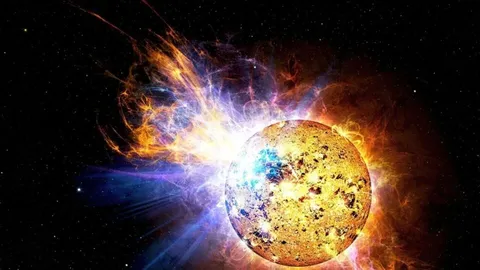
Scientists at the Max Planck Institute have determined that our Sun is theoretically capable of generating so-called superflares — extreme bursts of energy far exceeding any solar flare recorded so far.
The researchers focused on the largest sunspots, finding that they hold enough energy to trigger such a superflare. Until now, the Sun had seemed relatively calm compared to other stars, making this finding about its hidden potential particularly significant.
Why it matters
Modern society depends heavily on technology that is highly vulnerable to space weather. A superflare, should one occur, would have a devastating effect on power grids and satellites — infrastructure that today underpins communications, navigation and countless other essential services worldwide.
The study serves as a reminder that while such an event currently remains a theoretical scenario, its potential impact on global infrastructure could far exceed anything caused by previously observed solar flares. Scientists stress that understanding the Sun's behavior and the energy potential stored in its sunspots is essential for assessing the risks that space weather poses to our technological systems.