Counting stars in the Great Square of Pegasus reveals how dark your sky is
The Guardian's Starwatch column invites readers to find the Great Square of Pegasus and count the stars inside it to gauge how dark the sky is where they live.
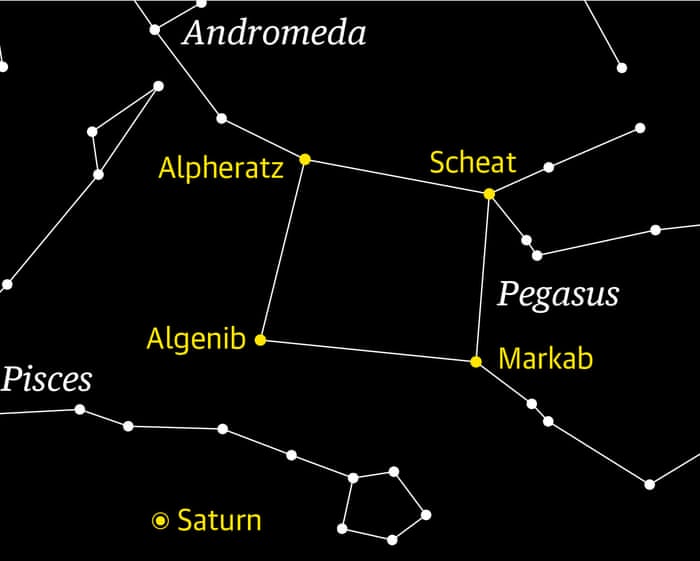
The Guardian's astronomy column Starwatch is this week proposing a simple experiment for judging light pollution: find the Great Square of Pegasus and count the stars visible inside it. Anyone with a clear sky can try it, and the result shows how dark the sky is at their location.
Where to look
The chart shows the view looking south from London at 2000 GMT on 9 November. High in the sky sits the Great Square of Pegasus, a distinctive pattern of four stars marking the body of the mythical winged horse. The corner stars are Alpheratz, Scheat, Markab and Algenib, and they are bright enough to be seen even from suburban areas.
How to count
Choose a spot away from direct lighting and wait at least 20 minutes so your eyes can adjust to the dark. Avoid looking at your phone during this time, since a bright screen ruins dark adaptation. Then study the inside of the square carefully and count every star visible to the naked eye. The four corner stars are not included.
What the result means
One star indicates a relatively poor sky. Four stars suggest an average sky, while seven point to good conditions. A count of 13 means the sky is very good. Around 35 stars means you are observing under an exceptionally dark sky.