Sweden's Centre Party opts to form government with Social Democrats
Sweden's Centre Party has decided to continue government formation talks with Social Democrat leader Magdalena Andersson and back her for prime minister. Serious obstacles to a four-party coalition remain.
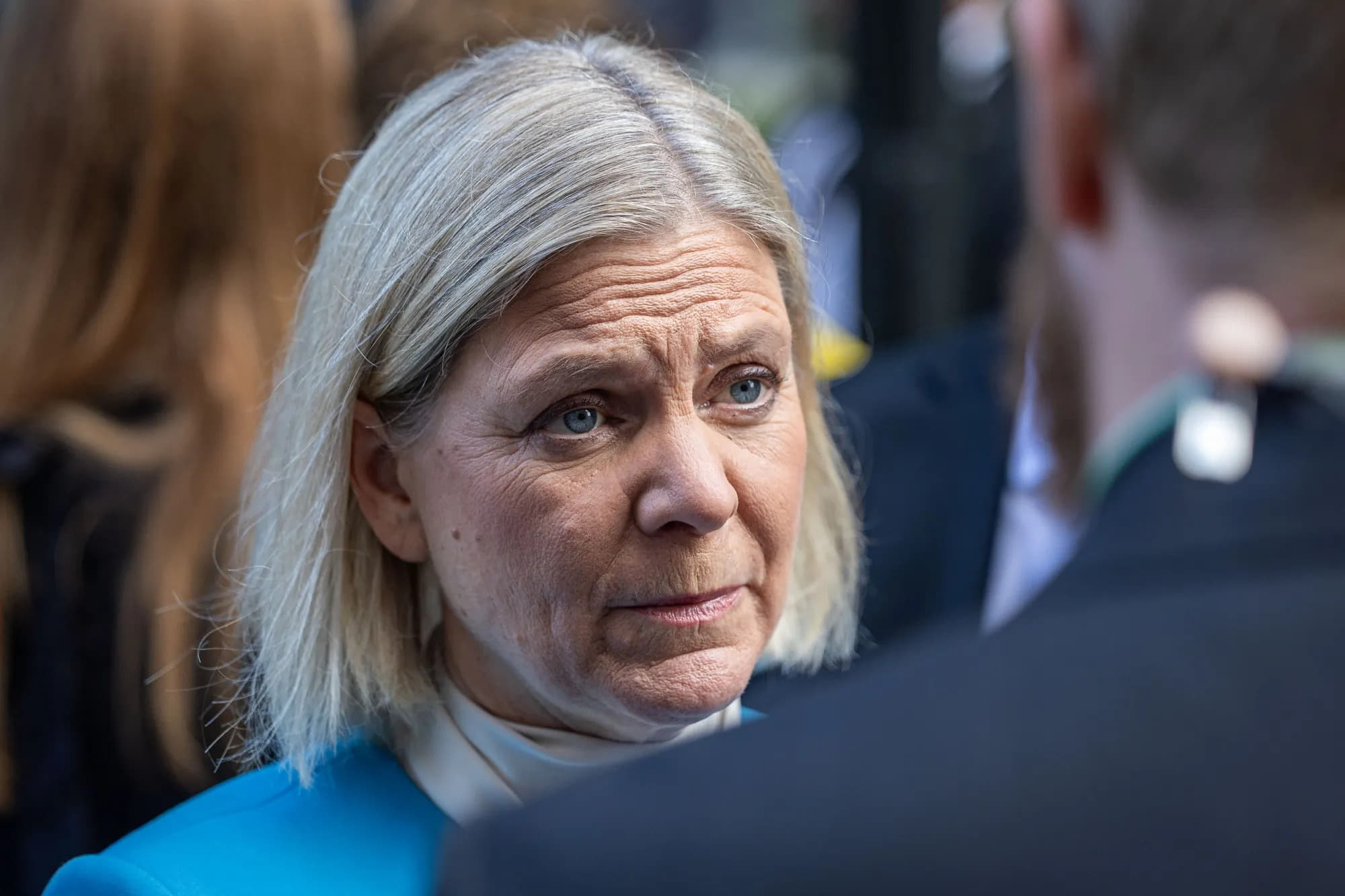
Sweden's Centre Party has decided to continue talks on forming a new government with Social Democrat leader Magdalena Andersson and to support her bid to become prime minister. Bloomberg reported the decision, as relayed by the Ukrainian outlet European Pravda. It follows the Social Democrats' narrow win in the September parliamentary election and shapes which coalition will govern the country next.
Centre Party leader Elisabeth Thand Ringqvist effectively held the power to decide who would head the new government. After weighing proposals from the Moderates, led by current Prime Minister Ulf Kristersson, and from Andersson's Social Democrats, she chose the latter. On Sunday, Thand Ringqvist said Andersson's offer best matched her party's goals on job creation, tackling climate change and supporting the social welfare system.
Obstacles to a coalition
The decision opens the way to a four-party coalition of the Social Democrats, Centre Party, Greens and Left Party. Significant obstacles remain, however. Thand Ringqvist refuses to let the Left Party into government because of differences over economic policy, while the Left Party refuses to back any government it is not part of. Andersson has said she wants to form a government with the Centre Party and the Greens, with outside support from the Left Party.
Kristersson's role and the votes
Current head of government Ulf Kristersson still holds an official mandate from the parliamentary speaker to lead government formation talks. He must report on his progress on Tuesday, 17 November, after which the speaker will decide whether to put his candidacy to a parliamentary vote.
Two votes on a prime ministerial candidate have already failed: one on Andersson and one on Thand Ringqvist. No more than four failed votes can be held before new parliamentary elections must be called.
In the 13 September election, four centre-left parties secured a minimum majority of 176 of 349 seats.