Amazon runs the world's largest robot fleet: over 1 million machines and the future of human work
Amazon operates more than 1 million robots in its warehouses and plans to expand the fleet significantly. It also employs over 1.5 million people, and researchers point to risks from robot-set work pace.
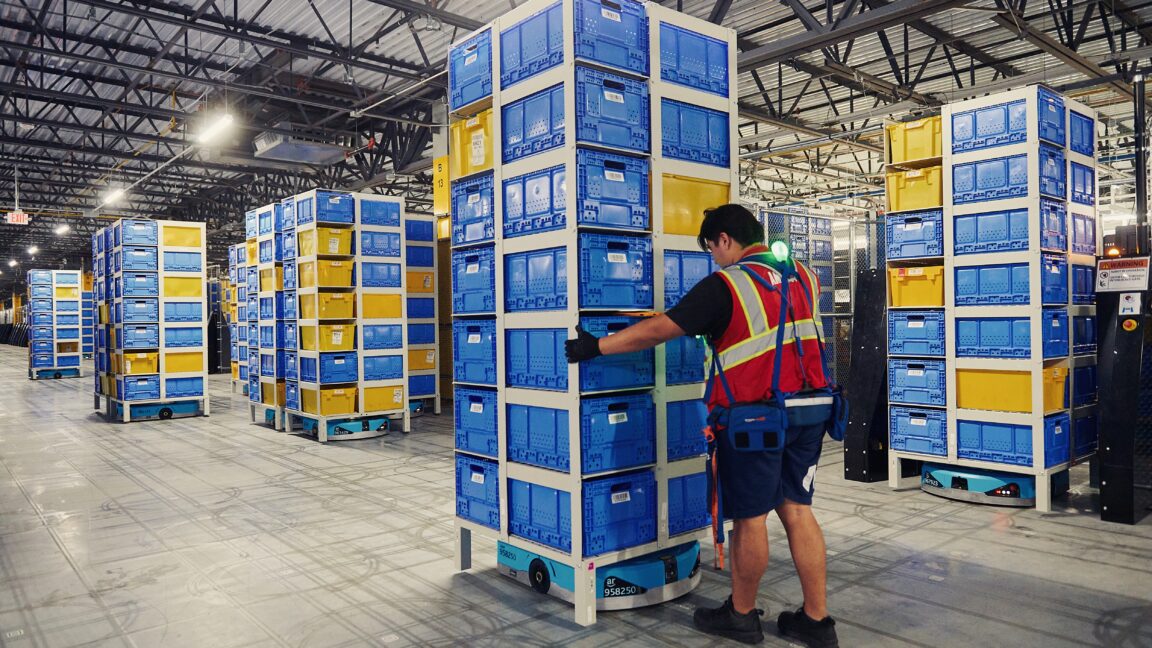
Amazon, the US technology and e-commerce company, has deployed more than 1 million robots in its warehouses, giving it the largest robot fleet in the world. The machines help deliver tens of millions of packages daily on a same-day or next-day basis. The company plans to grow the fleet further, yet it is also the world's second-largest corporate employer, with more than 1.5 million full- and part-time workers according to its 2025 annual report.
Amazon executives say robots take over the toughest tasks, those carrying the greatest risk of fatigue and injury. Labor advocacy groups and independent researchers counter that AI-driven automation is not purely beneficial for people. Brian Greenwood, a business professor at George Mason University, explains that collaborative robots differ from earlier automation because they work physically close to people and can dictate the pace of work.
From Kiva to Amazon Robotics
The turning point was the 2012 acquisition of robotics firm Kiva Systems, later renamed Amazon Robotics. Most of the fleet still consists of wheeled robots that bring shelving pods to workers. The newest, Proteus, has sensors that let it operate safely around people. AI models called DeepFleet are used to predict robot traffic jams.
The company expects to more than double its fleet of robotic arms this year; Scott Dresser, vice president of Amazon Robotics, described the current number as being in the single-digit thousands. The first arm developed in-house, Robin, began operating in Florida in 2022. It was followed by Cardinal, which packs parcels into carts, and Sparrow, which handles a huge variety of products. A machine learning method for Robin achieved a 93.73% pick success rate versus 92.28% for the best traditional algorithm. The newest arm, Vulcan, is the first to combine vision with force sensors that provide a sense of touch.
Amazon also announced this year new robot factories in Austin, Texas, and Greenwood, Indiana.