UN talks on regulating 'killer robots' postponed to 2028
UN talks in Geneva on regulating AI-powered weapons ended without a negotiating mandate, and countries agreed to extend discussions until 2028. Russia blocked formal negotiations, with several other countries also resisting.

United Nations talks in Geneva on regulating lethal autonomous weapons systems, often called "killer robots," ended on Saturday, 21 November, without a negotiating mandate. Held under the Convention on Certain Conventional Weapons, the talks closed with countries agreeing to extend discussions until 2028. Non-governmental organizations described the outcome as disappointing.
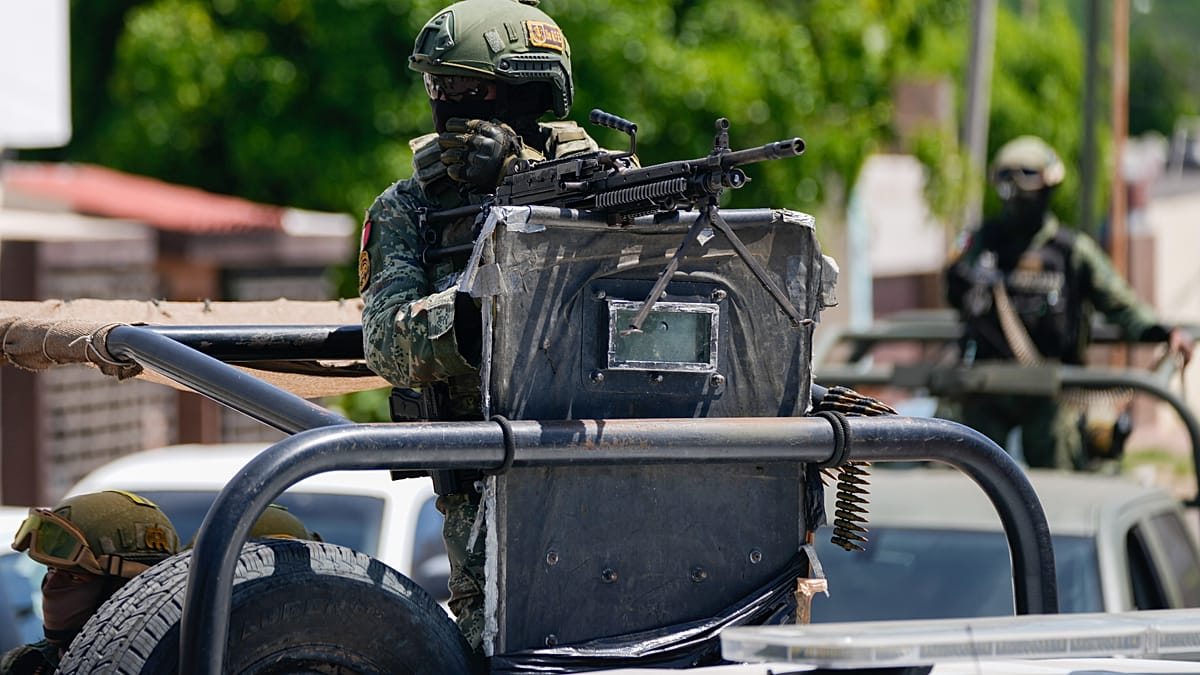
For five days, the convention's member states tried to reach agreement on legally binding rules for weapons that can select and attack targets without human approval. The technology is growing in importance as AI advances. Ukraine, Russia, Israel and others use drones and robots in warfare, though they say humans retain final control over pulling the trigger. Stop Killer Robots, a coalition of more than 300 organizations, says such systems have already been tested or deployed, including in Ukraine and Gaza.
Russian veto and informal talks
Because any decision requires consensus, Russia was able to block formal negotiations all week and refused to let observers, including the European Union, take part. To get around the veto, talks were held informally. A Brazilian diplomat suggested Russia was not alone, saying some countries were hiding behind it. Two EU diplomats named the U.S., the U.K., South Korea, Japan, Turkey and Israel as also resisting binding regulation.
France proposed a "hybrid document" combining binding and non-binding elements, while Germany favored an "international instrument" rather than a legally binding protocol. In the final hours, countries pushing for regulation, including Ireland, Brazil, Belgium and Austria, softened their positions for fear of leaving empty-handed.
The final decision calls for "elaborating" an instrument on lethal autonomous weapons systems within the context of international humanitarian law. A group of intergovernmental experts is to report its conclusions to a 2028 meeting of the treaty's parties. The decision does not mention a legally binding instrument. Verity Coyle, deputy director for arms at Human Rights Watch, said the technology is racing ahead, while Rain Liivoja of the Asia-Pacific Institute for Law and Security said it remains possible, even likely, that there will be no treaty by the end of 2028.