Polls show far-right AfD leading in Mecklenburg-Vorpommern ahead of state election
Five days before the state election in Mecklenburg-Vorpommern, polls show the far-right AfD ahead of the governing SPD, while the CDU struggles even to enter parliament.
A polarized campaign
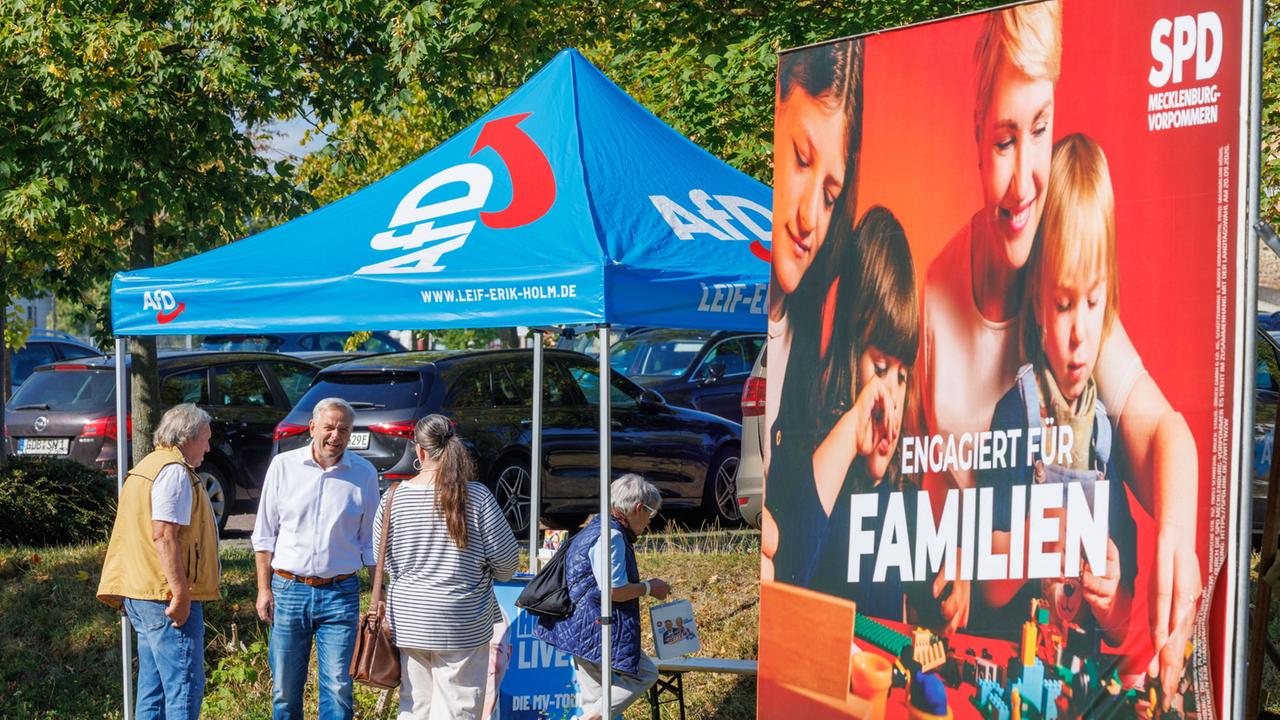
Germany's northeastern state Mecklenburg-Vorpommern holds its state parliament (Landtag) election on Sunday, September 20, in what is being described as one of the most polarized campaigns in the state's history, according to tagesschau.de. Based on Infratest dimap's "MV-Trend" survey, the far-right Alternative for Germany (AfD) leads with 38% support, roughly five percentage points ahead of the party of incumbent state premier Manuela Schwesig (SPD). Nearly a third of respondents said they would support a future state government led by the AfD — a prospect that worries parts of society, who fear an unprecedented shift to the right. For the first time, representatives of various religious communities issued a joint appeal urging voters to consider "protection of minorities" when casting their ballot, seen as a distancing from the AfD.
Christian Democrats at a historic low
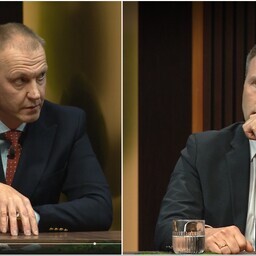
While the AfD and SPD compete closely for first place, other parties trail far behind. The CDU has fallen to just 7% in polls, a level party leader Daniel Peters has called an "existential fight," with some analysts suggesting the Christian Democrats could even fail to clear the 5% threshold needed to enter parliament, NDR.de reports. It remains uncertain whether the Greens and the BSW will re-enter the Landtag, while the liberal FDP is now counted among the small parties. Die Linke has shown the strongest performance among the smaller parties, polling between 9 and 11%, close to its result in the 2021 election. On Tuesday evening, NDR television hosted a debate among the four smaller parties — CDU, Die Linke, the Greens and BSW — whose leaders, according to pollsters, are unlikely to win but could become "kingmakers" in forming the next government, since the AfD and SPD are expected to decide the race for first place.
Key issues and criticism of the federal government
Surveys show voters rank education, the economy and migration as the most urgent problems, followed by concerns about unemployment, healthcare and pensions. The AfD is campaigning on radical change, proposing a halt to asylum admissions, an end to wind power expansion, and the reactivation of the Nord Stream gas pipelines, while Schwesig emphasizes stability, job preservation and free daycare. Tagesschau.de notes that around 7.5% of industrial jobs in the state were lost between 2020 and 2025. Neither the SPD nor the CDU can count on support from Berlin during the campaign — Chancellor Friedrich Merz made only one public campaign appearance in the state, in Kühlungsborn — and Schwesig herself said in May that the federal government had lost the population's trust. Political scientist Wolfgang Muno of Rostock expects high turnout, pointing to the recent election in Saxony-Anhalt, where an AfD win served as a mobilizing signal both for its supporters and for opponents. NDR.de adds that about 10% of voters remain undecided, while 16% say they do not plan to vote at all. A separate Spiegel opinion piece discusses whether Schwesig can restore confidence in German politics, noting that she has drawn praise from across the political spectrum.