UK young jobseekers to take part in AI boot camps
The British government is launching an AI training pilot for young people not in work or education, aiming to improve their job prospects. The course will include practical AI skills and apprenticeships with local employers.
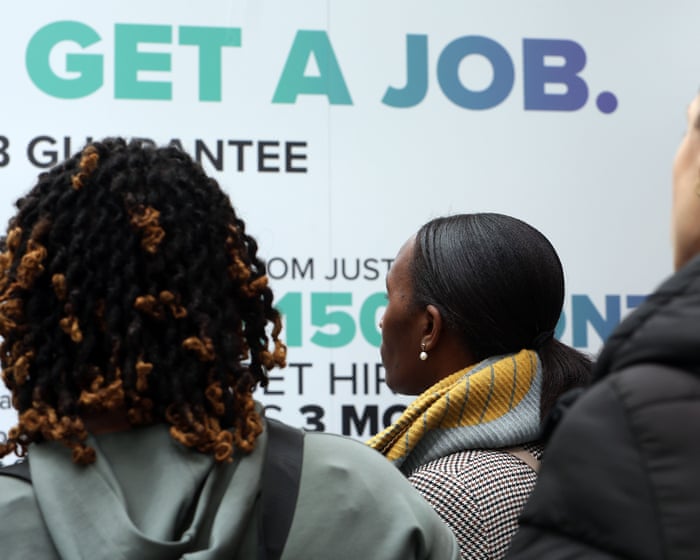
The UK government is introducing a pilot scheme that will offer artificial intelligence training to young people who are unemployed or at risk of becoming so, in an attempt to address the growing number of Neets – young people not in work or education. The programme turns to a technology that many see as a possible threat to jobs.
The pilot, based in north-west England, will give up to 70 people aged 16 to 21 three weeks of training. Participants will learn to build AI tools, understand how businesses use AI and use the technology responsibly, as well as receive workplace skills tuition such as office IT systems and timekeeping.
The government hopes that most attendees will secure apprenticeships with local businesses that have signed up, including defence firm BAE Systems and food company Heinz. Lisa Nandy, the digital, culture, media and sport secretary, said the scheme would 'support young people at a crucial juncture in their lives'. The pilot will be used to refine an England-wide AI skills programme due to be rolled out next summer.
The boot camp will use AI tools from US tech companies, including Microsoft, ChatGPT maker OpenAI and Anthropic, the startup behind the Claude chatbot.
Bouke Klein Teeselink, an academic at King's College London who studies the impact of AI on work, described the boot camp as a good idea in principle. He said making juniors more productive through AI training could make them more attractive to employers. However, he expressed doubt that a three-week course would be enough to make teenagers 'AI-ready', as AI readiness requires continuous learning and updating of skills.
Concerns about AI's effect on employment have focused heavily on school leavers and graduates, because AI tools are seen as able to perform the basic 'grunt work' often assigned to newcomers. White-collar industries such as law, finance and marketing are among the most exposed. This week, Stanford University in the US pointed to a decline in employment of young workers in AI-exposed occupations such as software engineering and customer service.
UK AI minister Kanishka Narayan said the programme would give young people the skills they need to thrive in an AI workplace. Data published in May showed that the number of 16-to-24-year-olds not working or learning exceeded 1 million for the first time since 2013, reaching 1.01 million in the January-to-March period. An interim report by former Labour minister Alan Milburn, also published in May, warned the figure could rise to one in six by 2031 and that Britain risked leaving behind a 'lost generation' ill-prepared for work. Last month, Andy Burnham committed to cutting the number of Neets but declined to set a target deadline.