US Air Traffic Control Failure Cancels or Delays More Than 15,000 Flights
The United States grounded all flights for over four hours on Friday evening after a failure in air traffic control systems. More than 6,600 flights were cancelled and about 8,600 postponed.
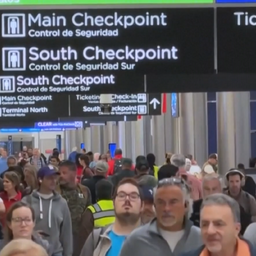
All passenger flights in the United States were banned for more than four hours on Friday evening, 13 November, after air traffic control systems failed. The ban also hit Atlanta, the world's busiest airport. In total, over 6,600 flights were cancelled and around 8,600 rescheduled, and air travel has still not fully returned to normal.
The Federal Aviation Administration, the US civil aviation regulator, imposed the ban citing emergency circumstances and safety considerations. Aircraft already in the air were allowed to land. Many Americans initially suspected a terrorist attack, but officials immediately dismissed such speculation.
Official explanation
US Transportation Secretary Sean Duffy said problems emerged at several regional air traffic control centres and, as a result, spread across the entire National Airspace System. According to him, switches and routers were overloaded with data and began producing contradictory, unstable information, so the decision was made to shut the system down.
US Homeland Security Secretary Markwayne Mullin said there was no threat to public safety, no one's life was ever in danger and no flight was put at risk. He described the decision as purely precautionary. Both officials said no signs of a cyberattack or artificial intelligence interference had been detected.
The ban lasted twice as long as the previous comparable disruption to US aviation, which occurred three years ago.
Passenger experience and expert warning
Flight attendant Lisa said passengers on a flight from Washington to Jacksonville, Florida, were already aboard when everyone had to leave the aircraft because of communication disruptions with planes at high altitude. She said it reminded her of 11 September 2001, when a flight ban lasted five days.
Aviation safety expert Steven Arroyo warned that such incidents could happen again. In his view, the cause lies in the state of infrastructure: many communication lines in the US still rely on copper cables, and air traffic control towers also need upgrading. He said the transportation secretary had stated the work could cost up to 50 billion dollars.
The consequences are expected to be felt for several more days: about 1,500 domestic flights scheduled for Sunday have already been cancelled.