US imposes new tariffs on dozens of countries over forced labour claims
US President Donald Trump has announced new double-digit tariffs on 60 countries, accusing them of failing to prevent forced labour. The duties replace expiring global tariffs and take effect Friday.
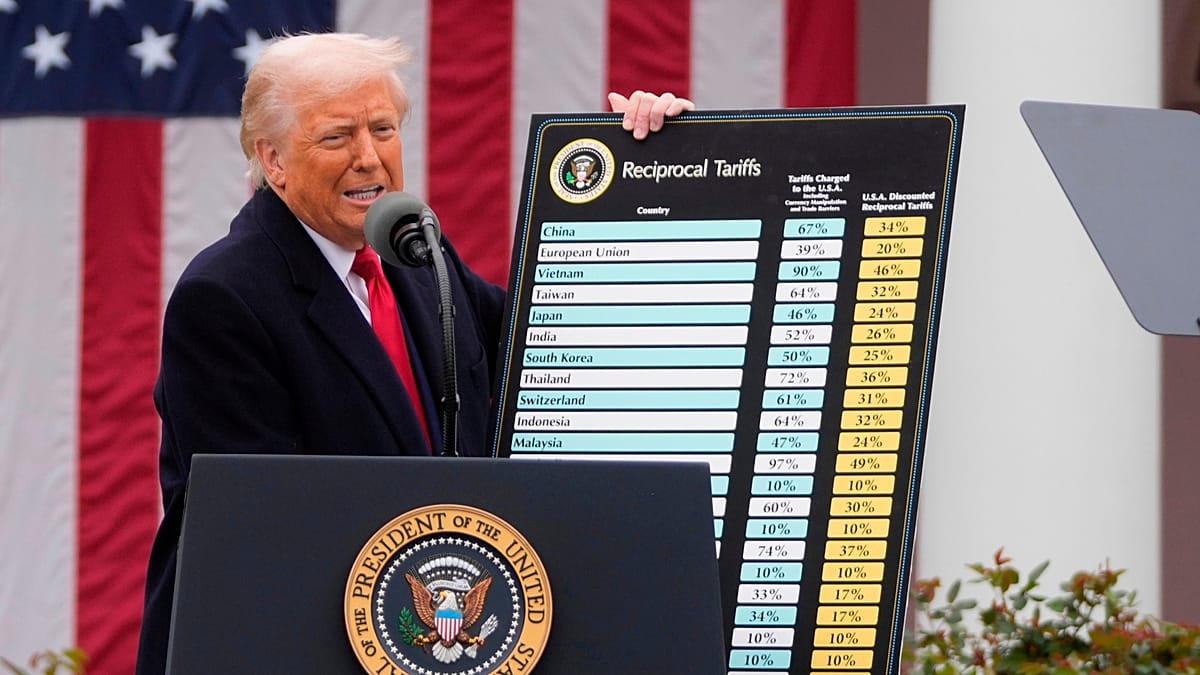
US President Donald Trump is imposing new tariffs on 60 countries, claiming they have not done enough to combat forced labour. The new duties range from 10% to 12.5% and will come into effect on Friday, replacing the previous 10% global tariffs that expire at 12:01 AM the same day.
The tariffs affect dozens of US trading partners, including major economies such as China, India and the European Union, accounting for 99% of US imports. US Trade Representative Jamieson Greer stated that the US has had a forced labour import ban for nearly a century and rigorously enforces it, adding that it is time for trading partners to do the same.
This move follows legal challenges to earlier tariffs. Last year, Trump imposed double-digit tariffs on almost all countries, citing a national emergency over trade deficits. However, in February the Supreme Court ruled that Trump lacked legal authority under the 1977 International Emergency Economic Powers Act (IEEPA). Consequently, the administration had to refund tariffs to importers, and Trump introduced 10% tariffs under Section 122 of the Trade Act of 1974. Those tariffs could only remain in force for 150 days and expire on Friday.
The new tariffs are based on Section 301 of the Trade Act of 1974, which authorises the president to impose import taxes and sanctions on countries deemed to engage in "unjustifiable," "unreasonable" or "discriminatory" trade practices. Countries that have implemented a forced labour import ban or committed to doing so—including Canada, the EU, India and the United Kingdom—will receive a 10% rate. Others, such as China, Japan and South Korea, will face a higher 12.5% rate.
Certain products are exempt from the levies, including oil, gas, fertiliser, and goods covered under the US-Mexico-Canada free trade agreement.
The decision has drawn widespread criticism. Brazil, facing 12.5% tariffs, called the move "arbitrary and unjustified" and plans retaliatory tariffs. Chile, also hit with 12.5%, emphasised its solid labour institutions and commitment to eradicating forced labour.
Human rights advocates expressed scepticism about the motivation behind the tariffs but acknowledged they could help curb forced labour. According to the International Labour Organization (ILO) Forced Labour Convention of 1930, forced labour is defined as "all work or service which is exacted from any person under the menace of any penalty and for which the said person has not offered himself (or herself) voluntarily." The ILO estimated that in 2021, approximately 27.6 million people were in forced labour on any given day worldwide.