US intelligence believes Russia behind explosive drone found at Leipzig airport
American intelligence officials reportedly believe Russia was behind last week's explosive-laden drone found at Leipzig airport, though Berlin has yet to formally name a culprit.
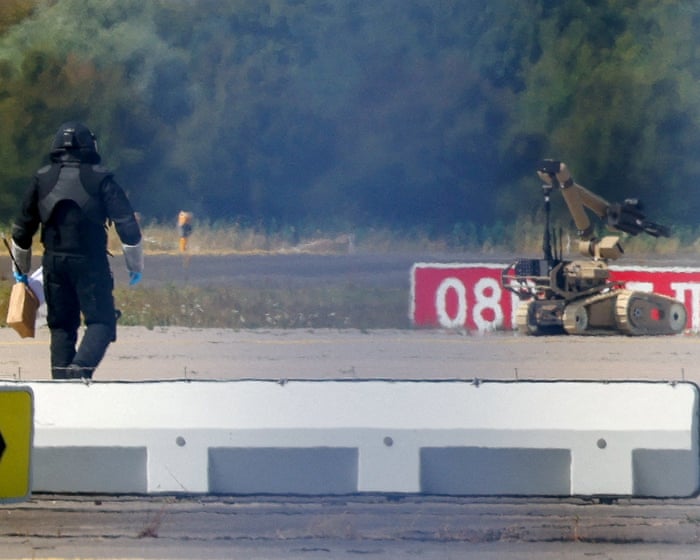
US media outlets report that American intelligence experts believe Russia was responsible for a drone attack carrying explosives discovered at Leipzig airport last week, even as German officials have avoided formally blaming Moscow.
The incident prompted Interior Minister Alexander Dobrindt to cut short his holiday in Italy and travel to Leipzig, after a quadcopter carrying semtex plastic explosives was found near a Ukrainian cargo plane at the major logistics and military hub. Dobrindt described it as part of a professional hybrid threat scenario carried out by a well-equipped foreign actor.
German tabloid Bild reported that DNA traces found at the scene matched a sample linked to an incendiary device mailed via DHL that exploded at the same airport in July 2024. Five men connected to that earlier case are currently on trial in Lithuania, where prosecutors allege they were employed by Russian intelligence.
While German lawmakers and security analysts have pointed toward the Kremlin, government officials have stopped short of a direct accusation. The Wall Street Journal, citing US officials, reported the drone likely belonged to the Russian government, while CNN said Washington had concluded it originated from a Russian intelligence service, based on the military-grade explosive material used.
The drone evaded the airport's defences and was only stopped roughly four hours after breaching security, when an airport bus driver spotted it. The same night, a DHL cargo plane that aborted its landing due to the drone collided mid-air with an unidentified object, which investigators now believe was a second hostile drone. The following day, drones were spotted over a military site housing components of US-made Patriot air-defence systems.
In response, Germany's interior ministry announced it will double its anti-drone unit to 300 personnel and expand operational bases from four to eight. Russia's embassy in Berlin dismissed the accusations as a provocation.
Political backdrop
Germany is Ukraine's largest national provider of military aid. Three regional elections are due next month in eastern Germany, where support for Kyiv remains contentious and fears of provoking Russia run high. Political scientist Wolfgang Schröder said Berlin's caution stems partly from concern that formally labelling the incident a Russian military attack could escalate the matter into a Nato security issue, deepening Germany's involvement in the war.