US troops set to return to Lithuania under new rotation
After a six-month pause, about 1,000 US soldiers are expected to redeploy to Lithuania, while Vilnius continues pushing for a permanent American base. Officials say the move sends a clear deterrence signal to Russia.
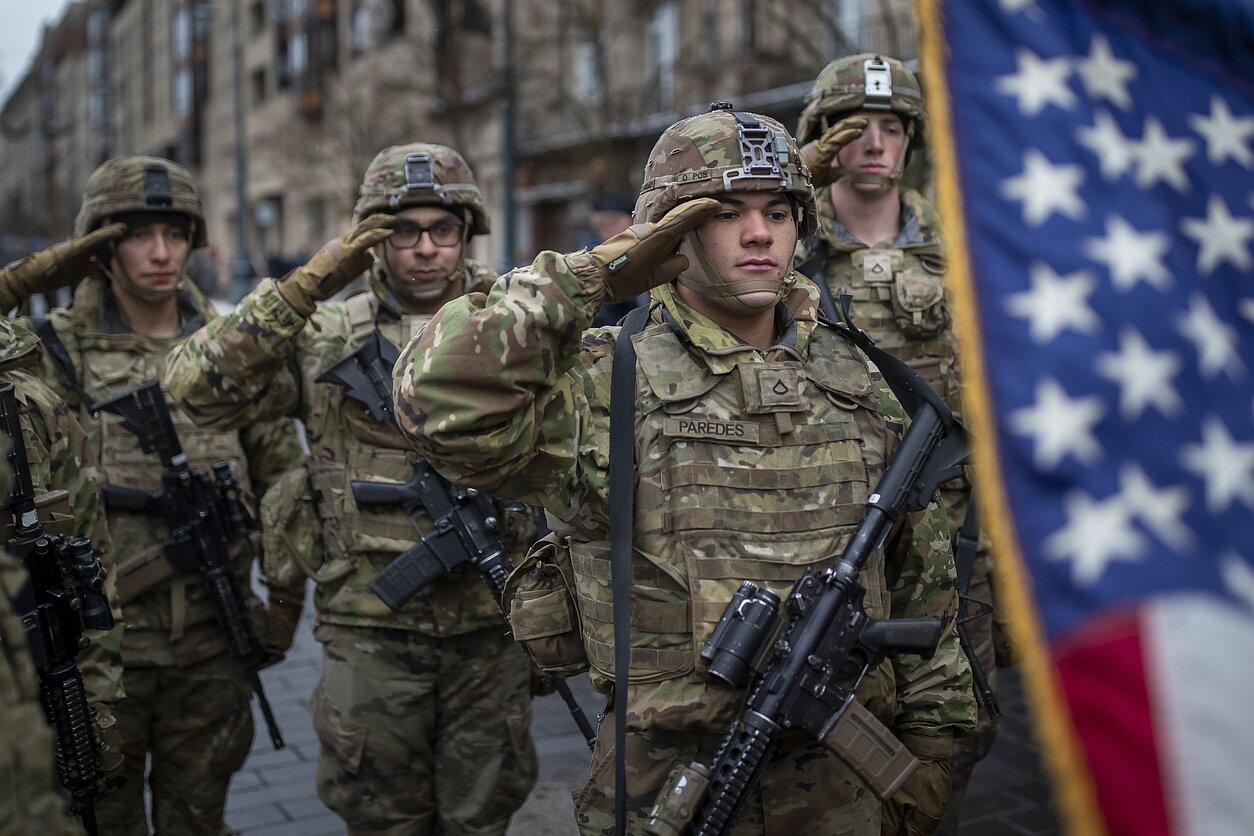
Lithuania expects roughly 1,000 US troops to return within about a month, following a six-month period during which newly built facilities near Pabradė stood empty. The continuous American mission in the country ended in June as Washington reassessed its military posture in Europe, but a fresh rotation is now planned.
President Gitanas Nausėda said the incoming rotation will again include a heavy battalion equipped with Abrams tanks, though the artillery battalion present in earlier deployments will be swapped for an engineering unit. Defence Minister Robertas Kaunas said this would meaningfully support the growth of Lithuania's national division and reinforce defensive lines along the border.
Engineering support for armour
Retired Colonel Gintaras Ažubalis explained that engineering capacity is especially valuable because Lithuania's own engineering regiment in Kaunas remains under development and still lacks much heavy equipment. Former armed forces chief Lt. Gen. Jonas Vytautas Žukas noted that as Lithuania builds up its own artillery capability, the US engineering unit will provide logistical support so the tank battalion can function effectively, with American personnel also bringing specialised machinery Lithuania currently lacks.
It remains unclear which units the returning troops will come from, with officials suggesting they could be drawn from US forces already stationed in Poland — something experts say would not diminish the deployment's strategic value. Whether another break will follow the nine-month rotation is also uncertain, though several former military leaders consider a continued presence likely.
Permanent base ambitions and allied contributions
Vilnius continues to push for a permanent US base, framing it as compensation for the earlier gap in troop presence. Estonia has likewise secured a return of US forces, with Foreign Minister Margus Tsahkna describing it as a clear warning against any thought of aggression toward NATO's eastern flank.
In Lithuania, Germany's brigade remains the leading allied commitment, targeted for full strength by the end of 2027 despite recruitment difficulties for specialist roles. In Latvia, Canada leads NATO's forward presence, while Latvian Prime Minister Andris Kulbergs said France has pledged to strengthen its contribution there, particularly in air defence. Washington is expected to outline broader plans for its European force posture in December.