U.S. Congress Approves $1 Billion for Ukraine: How Military Aid Evolves in 2026
Ukraine receives significant international military support in 2026, though aid mechanisms have shifted. The U.S. House passed a $1 billion direct aid plus $8 billion in loans, while Europe uses the PURL mechanism to buy American weapons. Challenges include the Czech initiative's decline and Patriot missile shortages.
Since early 2026, Ukrainian forces have recaptured over 600 square kilometers of territory. In May alone, unmanned systems struck 88,000 enemy targets, and Deep Strike hit 111 strategic objects in Russia. These achievements would not be possible without international military aid, which has transformed over the past year and a half.
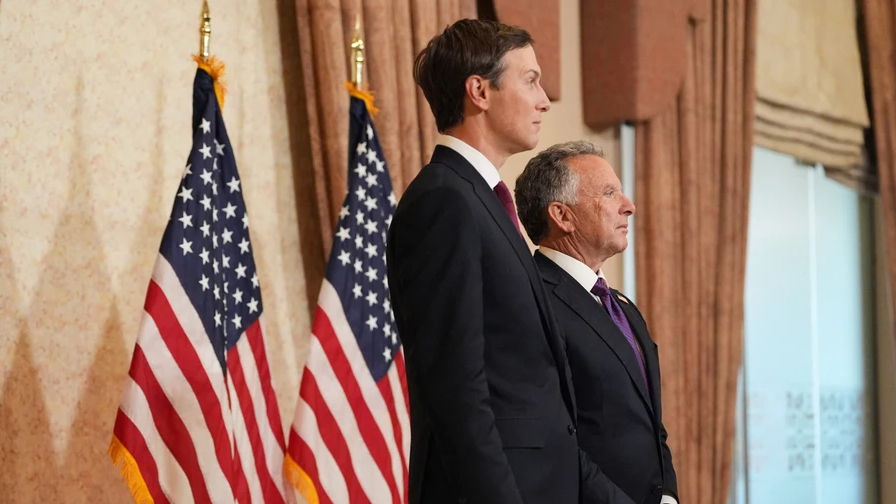
On June 4, the U.S. House passed the Ukraine Support Act, providing over $1 billion in direct assistance and up to $8 billion in military loans. This was achieved through a discharge petition, bypassing Republican leadership that had blocked Ukraine-related initiatives. 18 Republicans joined Democrats, resulting in 226 votes in favor. However, the bill still needs Senate approval, where Republicans hold a majority, and the president's signature. Moreover, according to the Congress Inspector General's report, nearly $19.5 billion from previous packages remain unspent or unallocated due to Pentagon bureaucracy, and $900 million under USAI have lapsed.
Europe has established the PURL (Prioritised Ukraine Requirements List) mechanism, operating on the principle 'European money, American weapons.' 24 countries have joined, including Japan, which contributed $14 million in May. Total PURL contributions last year reached $4.3 billion. This mechanism provides over 90% of Ukraine's anti-ballistic capabilities. Additionally, Windfall 1 and Windfall 2 programs, funded from windfall profits of frozen Russian assets, have been scaled up. Up to €1 billion is now invested directly in Ukraine's defense industry, producing Neptune and Palianytsia missiles.
However, there are concerning developments. The Czech initiative, which delivered 4.4 million large-caliber shells in 2024-2025, is now at risk. After a government change, the Czech Republic stated it will no longer finance deliveries, only provide logistics and diplomacy. Consequently, the number of participating countries dropped from 18 to 9. Another challenge is the shortage of interceptor missiles for Patriot systems. While Ukraine has long sought a production license, only Japan had one outside the U.S. Now Germany has obtained a license and allocated $3.7 billion to start production. Negotiations with Poland are ongoing.
International military aid to Ukraine is not charity but a complex geopolitical business where each country pursues its own interests. Nancy Pelosi noted that over 70% of U.S. funds for Ukraine are spent within the United States. Therefore, Ukraine must not only utilize existing programs but also continuously strengthen diplomatic efforts to secure future support.