US Sanctions International Criminal Court While EU Weighs Blocking Statute
The US is imposing sanctions on the International Criminal Court over its arrest warrant for Israeli PM Netanyahu. The European Parliament gave the court the Sakharov Prize, but EU leaders are still weighing whether to use a blocking statute.
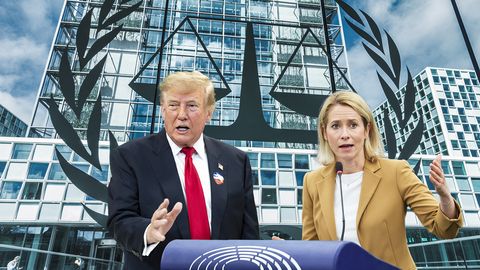
The United States administration of President Donald Trump has confirmed sanctions against the International Criminal Court (ICC) in The Hague, a permanent court that investigates genocide, war crimes and crimes against humanity. The measures are tied to the court's November 2024 arrest warrant for Israeli Prime Minister Benjamin Netanyahu. The move has produced one of the sharpest disputes between Washington and Europe, as European Union institutions back the court.
How the dispute began
In November 2024 the ICC issued arrest warrants for Netanyahu and former Israeli defence minister Yoav Gallant. The court found grounds to suspect the use of starvation as a method of warfare and crimes against humanity, including murder and persecution. The charges relate to Israel's military campaign in the Gaza Strip after the Hamas attack of 7 October 2023. A warrant was also issued for former Hamas commander Mohammed Deif.
The warrant obliges all 125 ICC member states to detain the two Israelis if they enter their territory. The US, Israel and Russia have not ratified the Rome Statute, on which the court is based.
US steps
Washington announced the sanctions on 9 October, right after the Nobel Peace Prize went to Navi Pillay, a former ICC judge. Secretary of State Marco Rubio said: "Either the ICC ends its threats, or we will end the ICC," while adding that the US hopes for a diplomatic solution. America's main concern is the possible prosecution of its own citizens; it has opposed ICC investigations into Afghanistan since 2020. Sanctions had earlier been imposed on 13 ICC judges and prosecutors.
The ICC called the sanctions an attack on the rule of law. Several European countries, Canada and Japan condemned them.
EU response
The European Parliament awarded the court the Sakharov Prize, and 58 MEPs wrote to European Commission President Ursula von der Leyen urging the use of all available tools, including the blocking statute, which would forbid EU companies from complying with US sanctions. EU foreign policy chief Kaja Kallas said dialogue would start in the coming months and that the decision must be prepared carefully, since there would be only one chance. The sanctions take effect 180 days after being announced. Kallas noted the court is under attack while it investigates Russian war crimes in Ukraine.