Australia Puts Forward Astronaut Katherine Bennell-Pegg for International Space Station Mission
Australia's federal government has sent the European Space Agency an offer to fly Australian of the Year and astronaut Katherine Bennell-Pegg to the International Space Station. The mission, planned for 2028, would be the first flight by a qualified astronaut under the Australian flag.
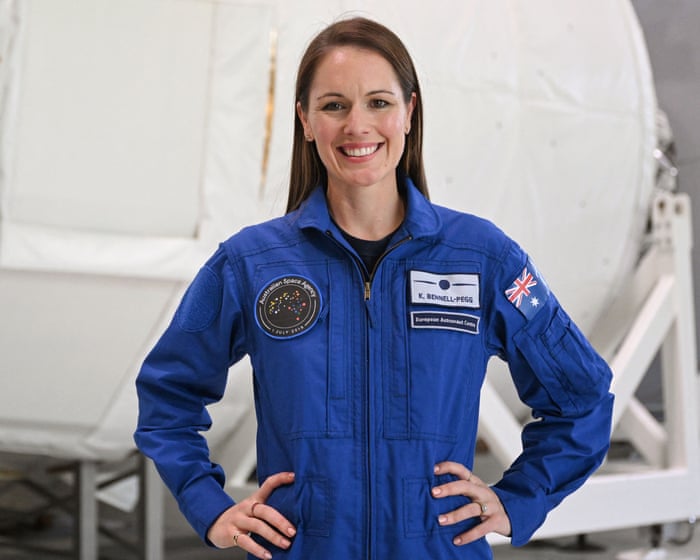
The Australian federal government has submitted an offer to the European Space Agency (ESA) to send astronaut Katherine Bennell-Pegg, the current Australian of the Year, to the International Space Station (ISS). The mission is planned for 2028 and would be the first time a qualified astronaut travels to space under the Australian flag.
Science minister Tim Ayres announced the decision on Friday, saying the government had worked extensively with the private sector, philanthropists and other levels of government to raise money for a flight he described as a significant cost. According to him, philanthropists have committed more than $6m in cash plus in-kind support, and some state governments have given indicative backing. His office had earlier said no government could fund such an undertaking alone.
Who is Bennell-Pegg
Bennell-Pegg is director of space technology at the Australian Space Agency (ASA) and completed astronaut training with the ESA in 2024. The agency paid $466,000 for her training at the European Astronaut Centre in Cologne, Germany. She is not the first Australian astronaut, but the first to qualify under the Australian flag: Andy Thomas and Paul Scully-Power flew as US citizens on Nasa missions, and Elaine Hyde made a suborbital flight last year aboard Blue Origin's NS-30.
Funding and reactions
In May, the ASA said it had entered "treaty-level discussions" with the ESA. In August, ministers wrote to state and territory leaders asking them to partner with the federal government on funding. South Australia, where the ASA is headquartered, has publicly committed to support; premier Peter Malinauskas said the mission could inspire young people towards science, technology, engineering and maths.
The campaign has been backed by entrepreneurs Dick Smith and Jim Whalley, who each pledged $1m, and by former prime minister Kevin Rudd. Richard de Grijs, a professor of physics and astronomy at Macquarie University, questioned whether the flight is worth $100m, while adding that returns could exceed the estimated figure. Darin Lovett, chair of the Space Industry Association of Australia, called it a down payment on the country's future in the industry.
Separately, an Australian-built lunar rover named Roo-ver is due to be sent to the Moon on a Nasa mission in 2030.