Eastern Europe's Divergent Commemorations of the Roma Holocaust
On the European Roma Holocaust Memorial Day, Eastern European countries remember the Nazi genocide of Roma and Sinti in different ways, with some states holding official ceremonies and others still lacking formal recognition.
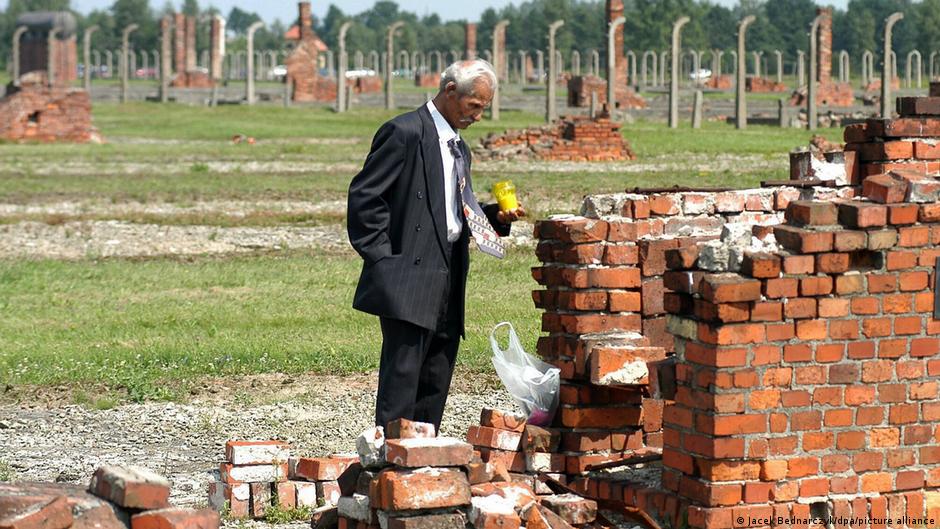
Germany took decades to officially recognize the Roma Holocaust — the Nazi genocide that claimed the lives of an estimated 500,000 European Roma and Sinti during World War II. It took even longer for August 2 to become an official day of remembrance in Germany and across Europe. The date commemorates the liquidation of the so-called "Gypsy Family Camp" at Auschwitz-Birkenau on the night of August 2–3, 1944, when thousands were killed in gas chambers or shot and beaten to death. The first commemorative event took place in 1994, half a century after the tragedy, following initiatives by Polish Roma groups. In 2015, the European Parliament formally declared August 2 as the European Roma Holocaust Memorial Day.
In Poland, home to an estimated 30,000 Roma, August 2 has been observed since 2011, with ceremonies at the Auschwitz Memorial. The village of Szczurowa, where German troops massacred Polish Roma in 1943, became the site of the first memorial for Romani Holocaust victims in Europe back in 1956. The Czech Republic, which has nearly 250,000 Roma, established the official memorial day in 2015. The central ceremony takes place in Lety, south of Prague, where a Nazi concentration camp operated from 1940. After years of controversy, a former pig farm on the site was closed in 2018 and transformed into a memorial, opened in April 2024 with President Petr Pavel and then-Prime Minister Petr Fiala in attendance.
Slovakia, with around half a million Roma, has marked August 2 since 2005. The main event is held at the Slovak National Uprising Museum in Banska Bystrica. Hungary, where about 600,000 Roma live, has observed the day since 2005 following a parliamentary resolution. Budapest alone has three memorial sites. Hungarian remembrance is also intertwined with the racist killing spree of 2008–2009, when four neo-Nazis murdered six Roma and wounded 55 others. Romania, home to approximately two million Roma, officially adopted the memorial day in 2020. The main ceremony takes place at the Holocaust Memorial in Bucharest, and in 2025 President Nicusor Dan became the first Romanian head of state to attend. Romania's wartime dictator Ion Antonescu deported Roma to Transnistria, where about 11,000 died.
Bulgaria, with roughly 700,000 Roma, has not declared August 2 an official day, but Roma organizations hold commemorative events. Croatia, with about 25,000 Roma, established the day in 2014, with the central ceremony at the Jasenovac camp site. North Macedonia, home to around 100,000 Roma, has observed the day since 2017, although it receives less attention because it coincides with a national holiday. Serbia, with around 130,000 Roma, has no official memorial day, but other remembrance events honor the victims.

