British Museum opens sweeping Korea exhibition with a jarring modern turn
Following the success of its Bayeux tapestry show, the British Museum has opened an exhibition spanning two millennia of Korean art, though reviewers point to an abrupt and uneven shift once it reaches the 20th century.
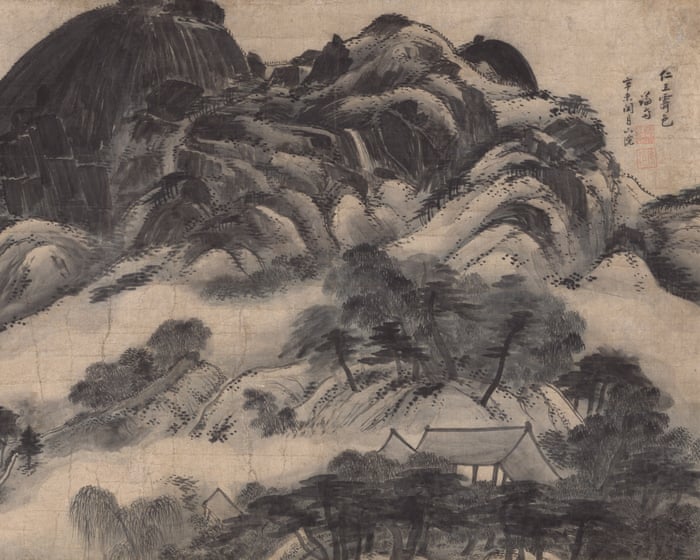
Riding high on the acclaim for its Bayeux tapestry exhibition, London's British Museum has launched another major show, this time tracing two thousand years of Korean art and craftsmanship. Visitors are first greeted by an eighth-century bronze bell from a Buddhist monastery, decorated with dragons and flame motifs, alongside early stoneware pieces including a fifth-century horse-shaped vessel.
The exhibition devotes considerable space to the Goryeo dynasty (918–1392), during which Korean potters adapted celadon, the green-glazed stoneware technique borrowed from China, into refined and distinctive forms. The later Joseon dynasty (1392–1897) is represented by a striking 18th-century "moon jar", a large near-spherical white vessel formed by joining two separate bowl-shaped halves.
According to reviewers, however, the show takes an abrupt and less successful turn when it reaches the early 20th century, mixing modern pastiches of traditional Korean art with pieces influenced by Western modernism. This later section draws heavily on the personal art collection of Lee Kun-hee, the former Samsung chairman who died in 2020, with Samsung listed as the exhibition's corporate partner. Critics argue this section fails to convey Korea's turbulent modern history, including Japanese colonial rule from 1910 to 1945 and the Korean war, which killed an estimated three million people.
Among the works addressing that turmoil are paintings by Lee Jung-seop, who became a refugee during the war and never saw his family again. The exhibition closes with Do Ho Suh's 2019 self-portrait, showing a tiny human figure beneath a cascade of coloured threads flowing from an image of a traditional Korean house.
/nginx/o/2026/04/30/17602725t1h1559.png)