Four Commonly Forgotten Aspects When Planning Home Renovation
Architect Marta Dzene and JUNG representative Leonids Popoks highlight common mistakes in renovation planning: late lighting planning, underestimating sockets and switches, planning only for current needs, and trying to foresee everything at once.
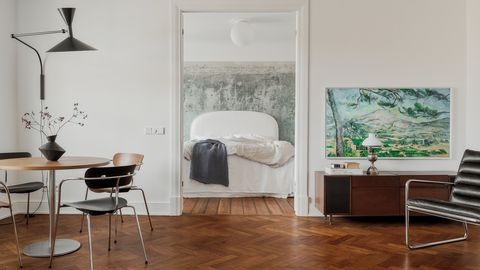
Home renovation is a significant investment, but even well-thought-out projects often overlook details that only become apparent in daily use. German electrical installation manufacturer JUNG, together with architect Marta Dzene from "Dzenis & Dzene arhitekti", has compiled four frequently forgotten aspects.
1. Lighting planned too late or too simply
People often focus on lamp design rather than how the space will be used in different situations. As a result, homes have only one central light source, unsuitable for all needs. The architect recommends planning multiple lighting scenarios from the start: general, functional, and mood lighting. Consider dimmable lights and color temperature, e.g., 2700 K for warm light or 3000 K for a more neutral feel.
2. Undervaluing socket and switch placement
Electrical planning is often considered only after renovation, when shortcomings like missing phone charging spots near the bed or insufficient kitchen outlets emerge. To avoid this, review daily habits and list all electrical devices, including spare sockets for future needs. Also important are switches that control lights from multiple locations, e.g., both ends of a hallway or bedroom entrance and bedside. Smart solutions allow light control via smartphone.
3. Planning only for today's needs
Homes are often designed for a specific life stage, ignoring future changes. For example, a home office might later become a nursery. The architect advises anticipating future scenarios and placing sockets and switches so the room can be easily adapted without major renovation.
4. Trying to foresee everything at once
Attempting to decide everything upfront can be a pitfall. Many things become clear only during use. Hence, flexible solutions that allow changing lighting scenarios or room functions are important. As JUNG representative Leonids Popoks notes, the modern home is no longer a static environment – its quality is defined by its ability to adapt to change. This trend is observed in Europe and the Baltic states.
/nginx/o/2026/10/08/17962234t1he6df.jpg)