Four months after the horrific Iran school bombing, fears grow that Trump and Hegseth will bury the truth
The US military's deadliest civilian bombing in decades in Minab, Iran, killed at least 175, mostly children. Critics doubt the Pentagon will release findings, fearing a cover-up under Hegseth's new approach.
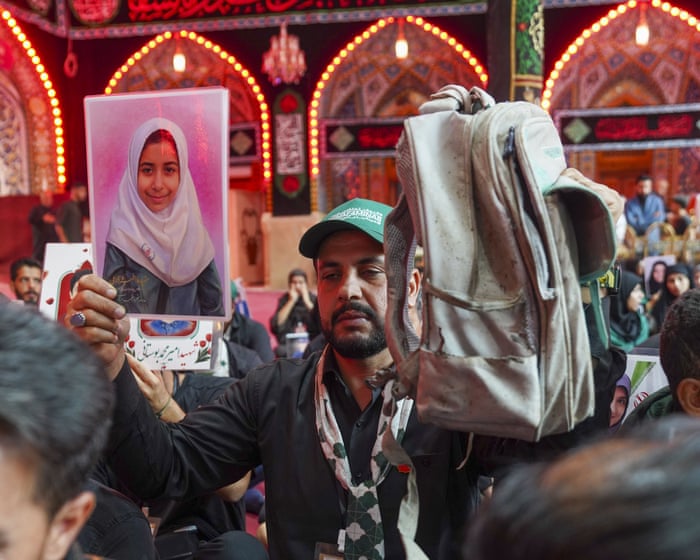
The attack on a girls' elementary school in the Iranian town of Minab was one of the US military's deadliest civilian bombings in decades. Nearly four months on, the Pentagon has produced no answers about why a Tomahawk cruise missile struck a school on the first day of the war, killing at least 175 people, mostly children under 12.
Critics doubt the Pentagon ever will, or will bury the results under classification. As the US signs a shaky ceasefire memorandum with Iran, the secretive investigation has become a test case for Secretary of War Pete Hegseth's new "warfighting" approach. In early March, he said: "Our rules of engagement are bold, precise and designed to unleash American power, not shackle it."
Shortly after the attack, Donald Trump suggested Iran carried it out. When it became clear a US-made Tomahawk was used, he claimed Iran had access to such missiles, which it does not. Celebrating a ceasefire deal to open the Strait of Hormuz last week, Trump signaled he was ready to write it off as a mistake: "Nobody did that on purpose."
The double-tap strikes hit the school building, killing mainly children under 12. Officials anonymously said the site was believed to be an IRGC base. Mohammadreza Ahmadi Tifakani lost two children: his seven-year-old daughter Hanieh and ten-year-old son Sobhan, who died in the second blast while searching for his sister.
Several former Pentagon and national security officials expressed doubt the US would take responsibility or release the full report. Hegseth's "anti-woke" crusade has shuttered units that review civilian casualty incidents, indicating combat decisions won't face close scrutiny. This may make it easier to skirt blame.
Media reports indicate the investigation has concluded. Preliminary results show the attack stemmed from using seven-year-old targeting data that failed to show the building next to an IRGC base was a girls' school. The New York Times reported that at least one analyst had alerted colleagues years ago that the US appeared to be targeting a school, but data was not updated.
Congressional inquiries have been stymied. Iranian-American Congresswoman Yassamin Ansari said she wrote to the Trump administration demanding answers and received "little to no response." She added: "Donald Trump is hiding the truth from the American people and Congress."
Wes Bryant, a former US Air Force targeting expert, said his few remaining colleagues overseeing civilian harm reduction have been prevented from seeing preliminary results. "I believe Hegseth and Trump are both going to do everything they can to suppress this investigation," he said.
A May report by the Pentagon's inspector general concluded the US military no longer has the people, tools, or infrastructure to comply with federal statutes requiring a civilian casualty policy. Niku Jafarnia of Human Rights Watch said Hegseth has publicly expressed skepticism about constraints on fighters and taken actions that systematically weaken protection measures.
Tifakani, who lost both children, expressed little hope for accountability: "They are witnessing everything themselves. We saw what happened in Gaza and Palestine. Now the same tragedy has befallen our own children."
